
Why You Know What to Do But Still Don't Do It
The knowing-doing gap isn't a willpower failure. Here's why insight alone doesn't change behavior—and what actually closes it, step by step.
The Tribe of Giants · October 12, 2026

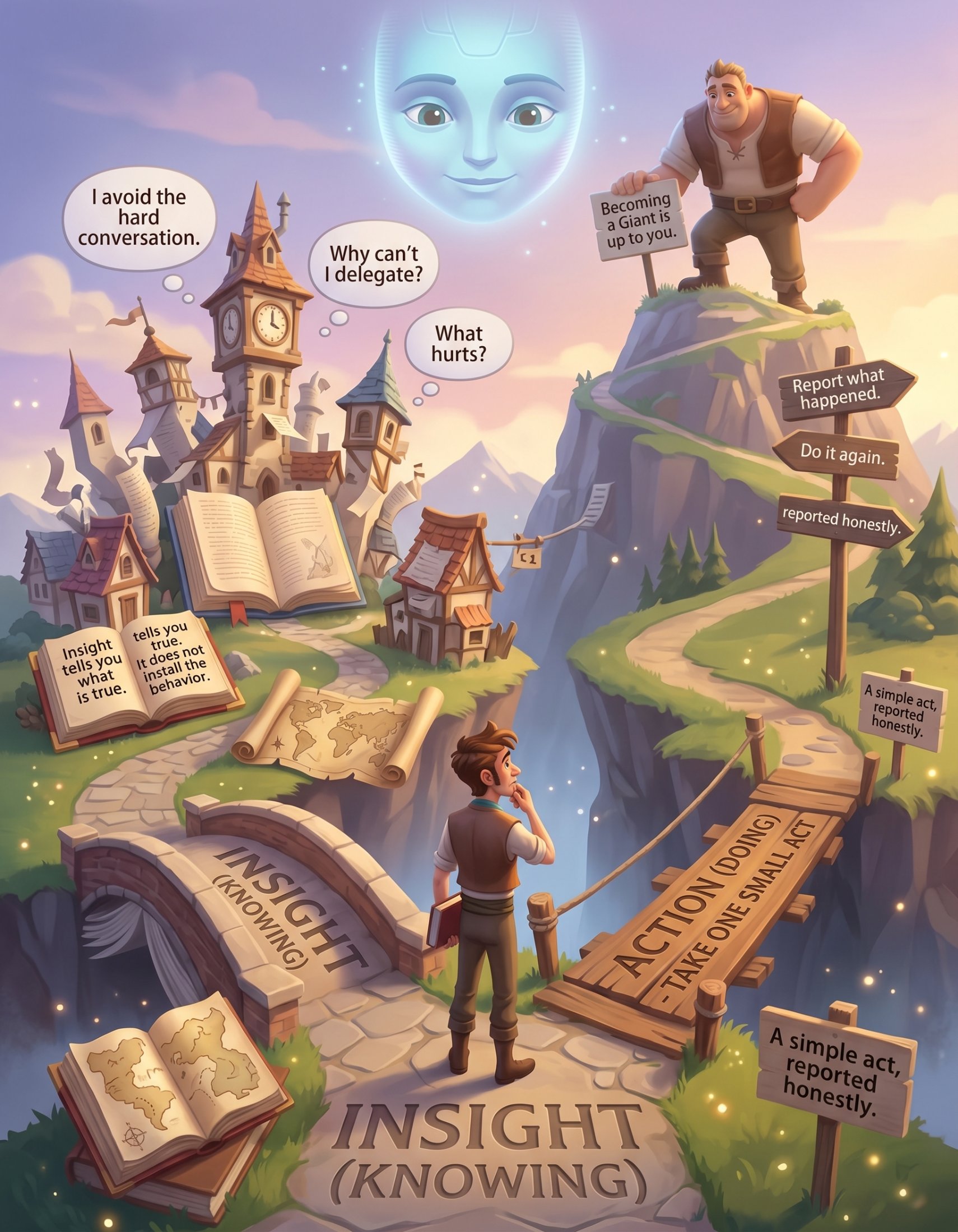
You wrote the goal down. You felt the pull of it — that real, honest surge of "this time is different." And then Tuesday happened, and the goal sat in the notebook while you did what you always do. The reason you can't follow through on goals isn't a lack of clarity or motivation — it's that writing a goal and feeling motivated about it both happen in your head, while follow-through has to happen in your body and your habits, and nothing has built the bridge between the two.
Motivation is a feeling. A goal on paper is an idea. Neither one is a behavior, and no amount of intensity in the feeling or clarity in the idea converts it into one automatically. You can know exactly why you're stuck — you could explain your own pattern to a stranger in five minutes — and still wake up tomorrow running the same loop. Inside the 12 Journeys framework, that's named plainly: "Insight is cheap. Behavior is not." You don't need one more plan you understand. You need a way to act on the plan you already have.
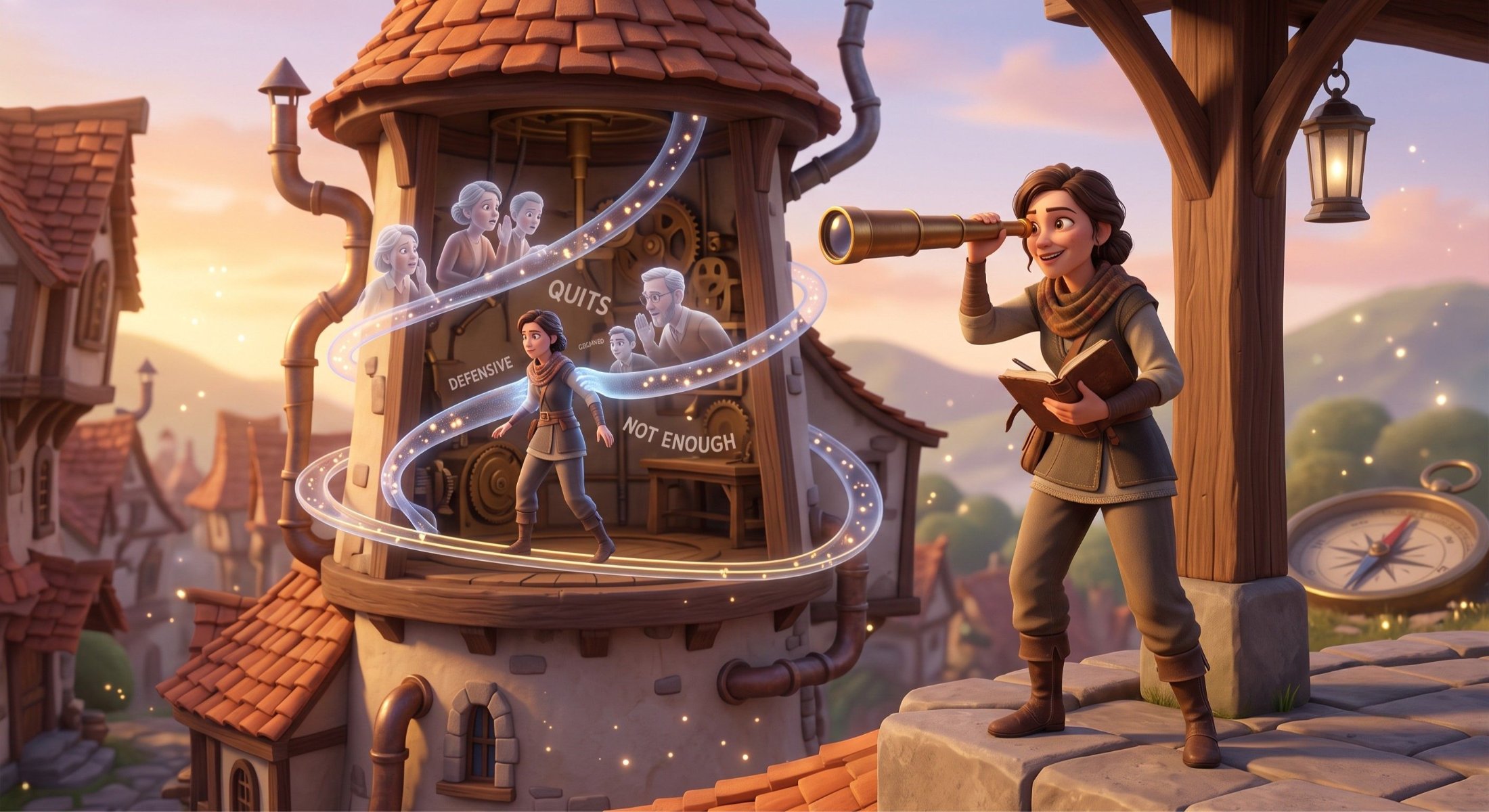
The mechanism the framework points to is that identity, not information, drives what you actually do. The journeys are built to work on that layer directly. Journey 1, led by Layla, exists to help you notice what's been running in the background — the autopilot responsible for the gap between the goal on the page and the day you actually lived.
This is the knowing-doing gap, and it's worth being precise about what it is and isn't. It is not laziness, and it is not a character flaw. It's a pattern — something that was built for a reason, kept you safe once, and now keeps you small. Why Can't I Just Start? Knowing Your Goal Isn't the Same as Acting On It looks at the moment right before the first step; this piece is about the ritual that carries you past that moment and into a repeatable habit of follow-through.
The gap shows up in a specific, recognizable shape: you write the goal, you feel the motivation, and then the next real-world moment arrives — the phone call, the gym door, the hard conversation — and the old pattern answers instead of the new intention. That's not a motivation failure. It's a handoff failure. Nothing built the bridge between the thought and the act.
This is the ritual, built from how the 12 Journeys actually moves people from insight to behavior.
Before you touch the goal again, name the specific moment where you expect the old pattern to show up — not the goal in general, but the exact fork: the hour, the trigger, the sentence someone will say. Inside the Tribe, the daily check-in is built to start here — in the body, not the to-do list — because the autopilot you're trying to catch runs faster than your thinking does. Naming it in advance is what turns an automatic reaction into something you can actually see coming.
Not the whole goal. One plank. This is the shape of Giant Crossings inside the Tribe: each crossing is one real act, planned in advance — including planning for the version where you fall — and then taken out in the real world, not rehearsed in your head. The acting is the part that was always missing; the writing and the feeling were never going to do this part for you.
After the act, you report what actually happened — not the polished version. Giant Crossings is built around this: you report honestly, falls included, and what gets counted is what you did after you fell, not whether you fell. Rimi, the Tribe's AI guide, is there for this part daily — by chat or by voice, no appointment needed — to help you notice the pattern again tomorrow. Rimi's own line draws the boundary clearly: "I'll teach you what I know—but becoming a Giant is up to you."
If the honest report is "I didn't do it," that's not a reason to scrap the ritual — it's data for the next Step 1. If judging yourself for the miss is the loudest voice in the room, Self-Compassion Exercises for When You Fail at It Too is built for exactly that moment, and 5 Self-Compassion Exercises for Under Two Minutes works when you have no time to spare before the next act.
Rewriting the goal, journaling about it harder, or finding a more motivating quote keeps you in the same layer — thinking about the goal. The bridge ritual moves the work into the layer where follow-through actually lives: a named trigger, a small real act, an honest report. You don't think your way into becoming the kind of person who follows through. You act your way there, one witnessed plank at a time, and the identity catches up to the behavior instead of waiting to go first.
This is also why doing it alone tends to quietly fail. A ritual with no witness is easy to skip and easy to lie to yourself about. A crew that sees your check-ins, a guide who asks tomorrow, a community that's done the same falling — that's what turns a private intention into something that actually gets practiced.
You don't need a better goal. You need the next plank. My 12 Journeys, home of the Tribe of Giants, gives new members 30 days of full All-Access, free, no card — all 12 journeys, Rimi, the Mirror, the full Giant Crossings game, and the Giant Library. Start free, meet Rimi, and name your first gap tonight.
Motivation and a written goal both happen in your head — they're thinking, not doing. Follow-through requires an actual act in the real world, and nothing automatically converts a feeling or an idea into a behavior. The gap closes with a specific act and an honest report, not with more clarity about the goal.
It's the space between understanding exactly what you should do — and being able to explain why you don't do it — and actually doing it. Inside the 12 Journeys, this is treated as an identity pattern running on autopilot, not a discipline failure.
Writing a goal clarifies it, but clarity isn't the missing piece for most people stuck in this gap — they're already clear. The bridge ritual adds what writing can't: a named trigger, a small witnessed act, and an honest report of what actually happened.
Report it honestly — that's Step 3, not a failure of the ritual. What gets counted inside Giant Crossings is what you do after you fell, not whether you fell. Try a short self-compassion practice to reset, then run Step 1 again on the next trigger.
A tracker records what you did; it doesn't help you notice the pattern before it runs, or hold you to an honest report when you fall. The ritual above pairs a daily guide (Rimi) and a real crew with the act itself, so the handoff from knowing to doing has a witness, not just a checkbox.
The knowing-doing gap isn't a willpower failure. Here's why insight alone doesn't change behavior—and what actually closes it, step by step.
You've tried harder. You've made resolutions, set goals, downloaded the productivity app.

Giant Crossings isn't a goal tracker — it's a loop of real acts, honest falls, and a crew that reads your reports. Here's how members are using it.

Knowing your goal and starting it are different problems — one is mental, one is physical. Here's why "just start" doesn't work, and what does.
That nagging sense that something's missing—the one you've been pushing down or trying to logic away—isn't a problem to solve. It's a signal.