Journey 7 · Uncertainty
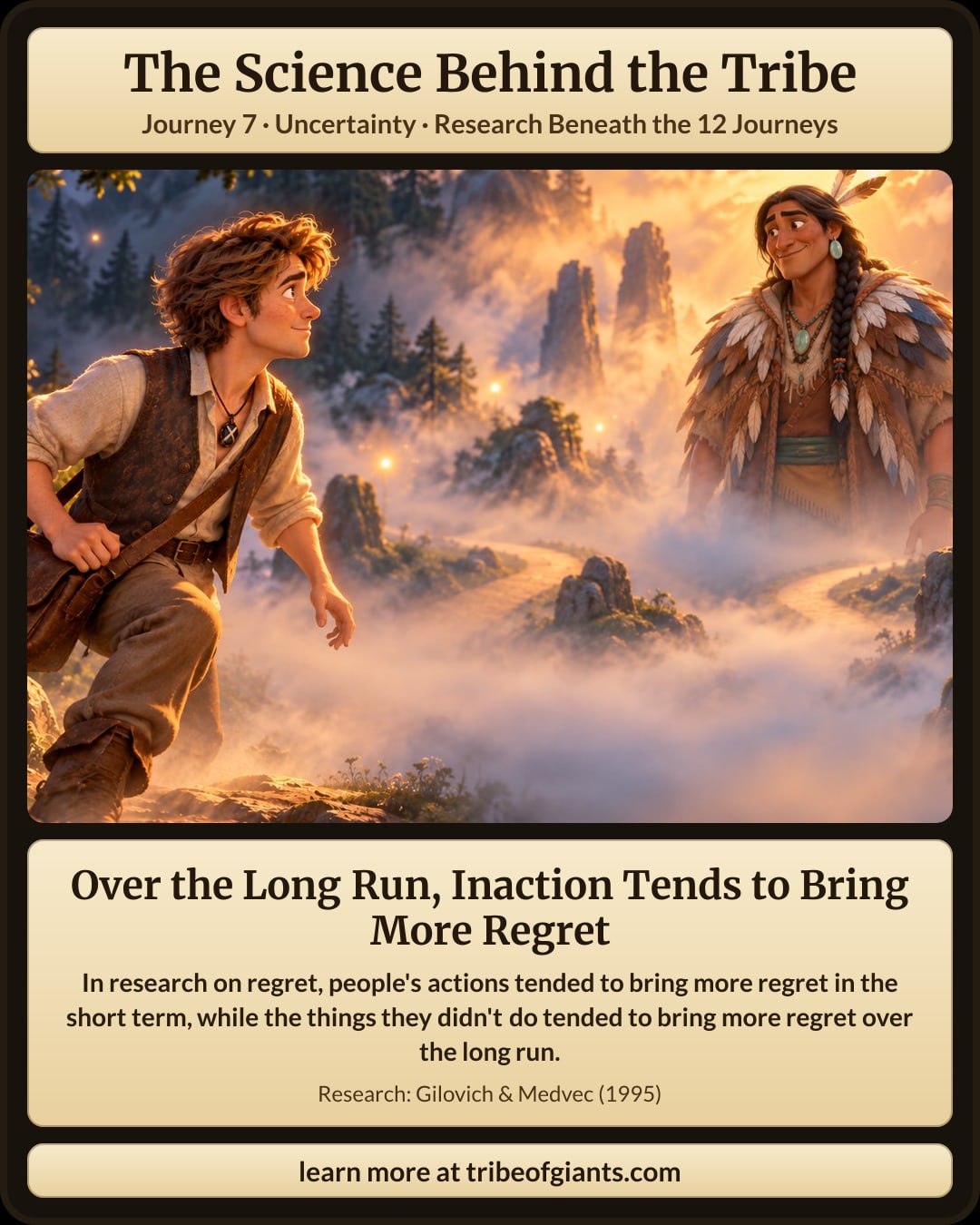
Over the Long Run, Inaction Tends to Bring More Regret
In research on regret, people's actions tended to bring more regret in the short term, while the things they didn't do tended to bring more regret over the long run.
Thomas Gilovich and Victoria Medvec brought together research on what people regret, and when. In the short term, people tended to regret things they had done more than things they hadn't. When people looked back over their whole lives, the things they hadn't done tended to weigh more (Gilovich & Medvec, 1995).
This is a pattern in how people tend to look back, still debated in its details, not a rule that every leap pays off: not every change is a wise one. But it does suggest that waiting for certainty isn't free. Standing still can carry a cost of its own, in regret that may only show up later.
Journey 7, Uncertainty, calls this the quiet price of standing at the edge of the mist. Tawa's practice doesn't ask for a leap; it asks for one small step toward what you value, taken before you feel ready. What have you been waiting to be sure about?
The research
Growing evidence Real research that's still building — results are promising and still being tested.
- Gilovich, T., & Medvec, V. H. (1995). The experience of regret: What, when, and why. Psychological Review, 102(2), 379–395.
A free account for life, with All-Access free for your first 30 days. No card.
Join free