Journey 4 · Acceptance
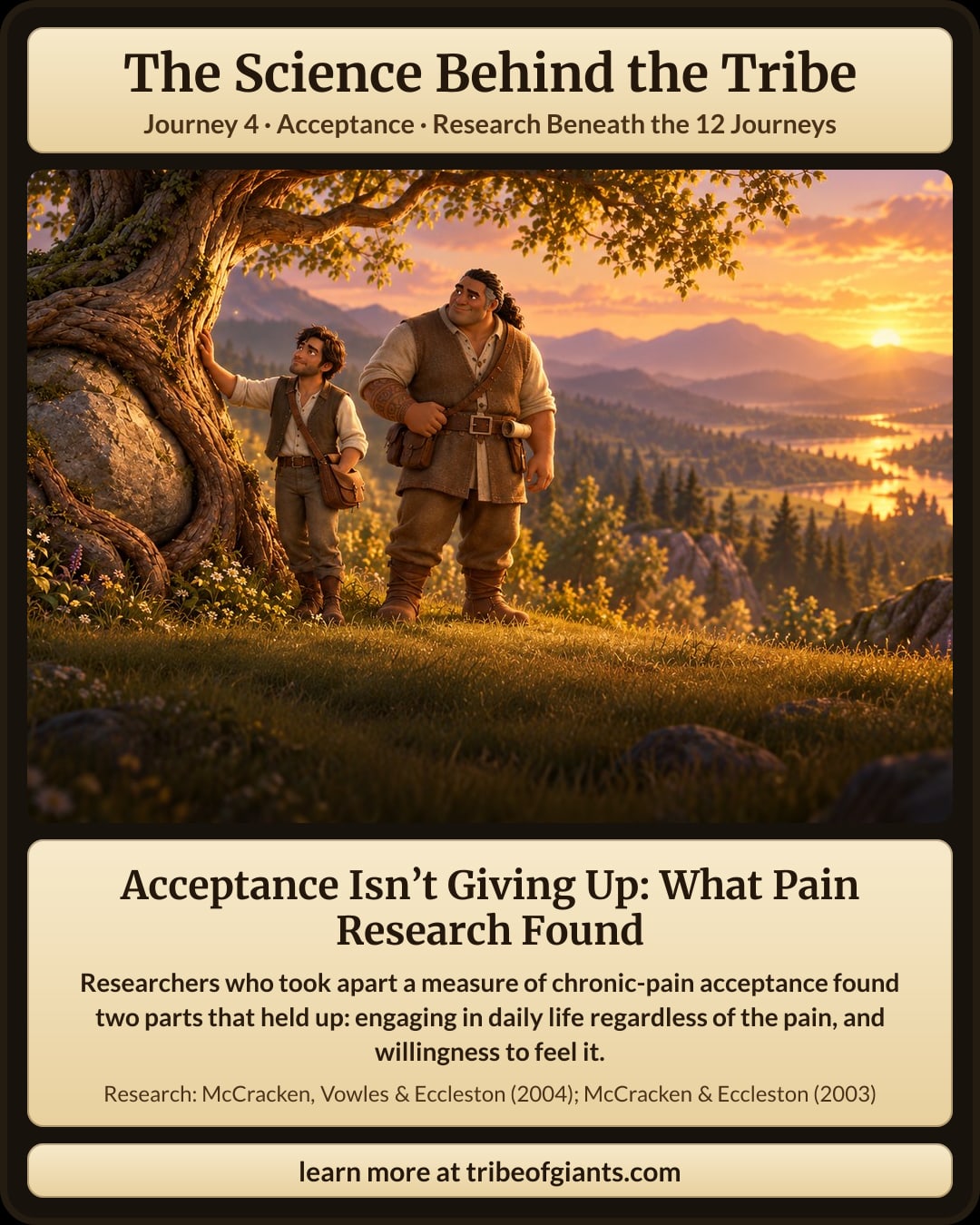
Acceptance Isn’t Giving Up: What Pain Research Found
Researchers who took apart a measure of chronic-pain acceptance found two parts that held up: engaging in daily life regardless of the pain, and willingness to feel it.
McCracken, Vowles and Eccleston (2004) took apart a questionnaire that measures acceptance of chronic pain. Two parts held up: engaging in life activities regardless of pain, and willingness to experience the pain. In an earlier study of 230 adults seeking help at a university pain centre, people who reported more acceptance also reported more time each day up and about, and had better work status (McCracken & Eccleston, 2003).
Look at what acceptance is in this research: not surrender, but carrying on with daily life while the pain is there, and being willing to feel it. These studies don’t show that acceptance shrinks pain. They’re about how much of your life the pain gets to run. And they show links, not proof that acceptance caused the difference.
In Journey 4, Acceptance, guided by Noa, this is why your Shoot, the one small action you commit to, is always something you do, not only something you think. What is one thing you would do this week with the hard thing still in the room?
The research
Strong evidence Replicated findings and meta-analyses.
- McCracken, L. M., Vowles, K. E., & Eccleston, C. (2004). Acceptance of chronic pain: Component analysis and a revised assessment method. Pain, 107(1–2), 159–166.
- McCracken, L. M., & Eccleston, C. (2003). Coping or acceptance: What to do about chronic pain? Pain, 105(1–2), 197–204.
A free account for life, with All-Access free for your first 30 days. No card.
Join free