

The RIPPLE Method: How Small, Repeated Acts Rewire Your Nervous System
RIPPLE is a six-phase method that moves your nervous system through identity change. One small, repeated act at a time teaches your body that the old.
The Tribe of Giants · August 11, 2026

There's a difference between understanding a pattern and feeling it shift.
A chatbot can generate frameworks for scarcity all day. It can push affirmations to your phone, run you through breathing techniques, and send you off feeling like you have direction. But it can't feel the moment your shoulders drop when you finally name a pattern that's been running your life. It can't notice the shift in your breathing when you realize you've been optimizing for everyone else's version of success—and ask you, quietly, what you actually want. It can't sit with the gap between knowing something in your head and actually becoming the person who lives it.
That gap is where somatic journaling lives. And it's nervous-system work—embodied, felt, relational. Your body knows what a bot never can.
Somatic journaling isn't journaling about your thoughts. It's journaling from your body.
When scarcity hits, it doesn't announce itself in your thinking mind first. It arrives as a caught breath when the bill comes. As shoulders that tighten when someone asks what you're working on. As a yes that tumbles out when you meant no. That's somatic—embodied, held in your nervous system. A screen can tell you scarcity isn't real. Your body still believes it is.
Somatic journaling teaches your nervous system what your mind is trying to learn. You notice the sensation—the tightness, the breath, the feeling—without rushing to fix it. You sit with it. You ask what it's pointing to. Not from your thinking mind. From your body's knowing. Then you write from that place.
The difference between knowing a pattern and breaking it isn't insight. It's the moment your nervous system learns it's safe to act differently.
Information delivery happens in your head. Real learning happens in your body.
When you practice somatic journaling—moving, noticing, reflecting on what happens in your nervous system—your body slowly starts to believe what your mind is trying to understand. You're not just thinking your way out of a pattern. You're feeling your way through it. The shift that sticks isn't the one you understand. It's the one you embody.
That's why a chatbot hits a ceiling. A chatbot can't mirror you back. It can't be there on Tuesday morning when you're alone with the feeling and you need to know you're not the only one who's felt it. It can't notice the micro-shift in your voice when you describe the pattern differently. It can't sit with you while your nervous system rewires itself.
A bot can talk about it. Your nervous system doesn't learn from a screen—it learns from what you do next.
When you join the Tribe, you're practicing with your nervous system.
Journey 8, Abri—Abundance—isn't a module you watch. It's a practice you do. You sit with your own patterns. You move. You notice what happens in your nervous system when you tell yourself there's enough. You do it with other people in the Tribe who are learning the same thing. Slowly, your body starts to believe what your mind already knows.
Rimi, your AI guide, supports your practice through daily check-ins and teach-back checkpoints. Your daily check-ins help you see yourself clearly and notice what you've learned. The teach-back checkpoints are moments to integrate what you've practiced. As Rimi says: "I'll teach you what I know—but becoming a Giant is up to you." The work is yours. The guide is the mirror.
Here's what a bot can never do: recognize you.
When another human in the Tribe names a pattern you recognize, your nervous system learns faster. You're no longer isolated with the feeling. That witness, that recognition—someone else who gets it because they're living it too—is part of the rewiring itself.
They notice the micro-shifts you almost miss. They ask the questions that crack you open. They see you trying and falling and trying again, and they count what you did after you fell. Why hybrid coaching beats pure AI is simple: a bot can't witness. A tribe can.
You're walking these journeys with people stuck in the same patterns you're stuck in. People learning to move from scarcity into abundance, from smallness into Giant-ness. That's not accountability from an algorithm. That's recognition. That's the thing no app can generate: someone else who gets it because they're learning it too.
You don't need permission or years of experience to begin. Here's what somatic journaling looks like in practice:
Notice the sensation first. Not the story about it—the actual feeling. Where does scarcity live in your body right now? The tightness in your chest? The heaviness in your shoulders? The flutter in your stomach?
Sit with it without fixing. Your instinct will be to solve it, name it, move past it. Don't. Stay there for a moment. Breathe into it. Ask what it's pointing to—not from your thinking mind, but from the sensation itself.
Write from the body. Don't journal about the feeling. Journal from it. What does it want to say? What does it need you to know? Write in whatever way feels true—full sentences, fragments, images. The form doesn't matter. The embodiment does.
Notice the shift. Even a small one. A breath that comes easier. A moment where you catch yourself before the old reaction. A yes that feels different because it came from choice instead of habit. That shift—that's your nervous system learning.
When you start free with 30 days of All-Access—no credit card required—all 12 journeys are available to you. You start seeing the patterns your nervous system has been running on autopilot. Then you practice interrupting them. Then other people in the community see you doing it and recognize themselves.
You're here because you needed more than fast. You needed real.
Q: Is somatic journaling the same as mindfulness or meditation?
Somatic journaling is more active than mindfulness. Mindfulness is about observing without judgment; somatic journaling is about inquiring from the body—asking what the sensation is pointing to, writing from that place, and allowing the body to teach the mind. You can practice somatic journaling as a complement to meditation, but they're different skills.
Q: How long does it take to actually feel a change through somatic practice?
Your nervous system learns through repetition, not insight. Some people notice small shifts in the first week—a breath that comes easier, a moment where you catch yourself before the old reaction. Real rewiring takes consistency. It starts the moment you begin paying attention to your body, but the depth builds over months of practice.
Q: Can I practice somatic journaling alone, or do I need a group?
You can practice alone—the journeys are built for that. But the Tribe amplifies it. When someone else names a pattern you recognize, your nervous system learns faster. You're no longer isolated with the feeling. That witness, that recognition, is part of the rewiring itself. Both matter; together they're stronger.
Q: What if I don't know what my nervous system is trying to tell me?
Start smaller. Don't ask what it's saying. Just ask where it lives. Where do you feel it in your body? Your throat? Your gut? Your chest? Stay there. Breathe. The message usually follows the attention. And in the Tribe, people ask each other exactly this question—they help you hear what your own body is saying when you can't hear it alone.
👉 Join free — a free account for life, with All-Access free for your first 30 days
RIPPLE is a six-phase method that moves your nervous system through identity change. One small, repeated act at a time teaches your body that the old.
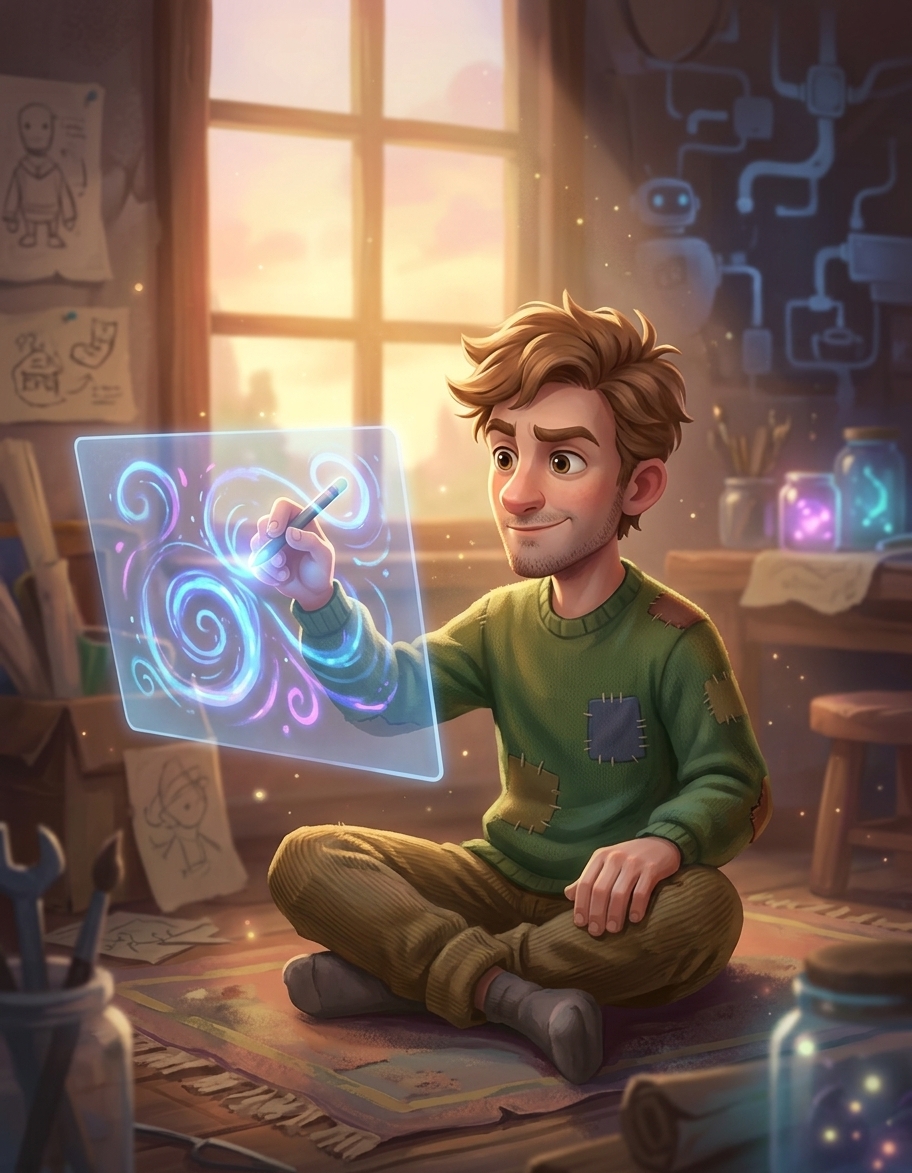
Creative expression shifts your nervous system from defensive reactivity to generative presence through repeated practice that contradicts old identity.

Scarcity mindset lives in your nervous system, not your thoughts. When you create—badly, messily, imperfectly—you shift from a defensive state…

Rimi can name the pattern underneath your choices. He can ask the question that makes you pause and see yourself differently.
You've noticed it: when your schedule is full, decisions get worse. When money is tight, you spend more. When time is gone, rest feels impossible.