

The RIPPLE Method: How Small, Repeated Acts Rewire Your Nervous System
RIPPLE is a six-phase method that moves your nervous system through identity change. One small, repeated act at a time teaches your body that the old.
The Tribe of Giants · September 29, 2026

Most mentor characters in a growth story exist to rescue the hero. Rimi doesn't.
He's big enough to. Rimi is a Giant — towering, warm, his voice carrying "both thunder and comfort." He could lift Ritt out of every hard moment without breaking a sweat. He doesn't. And that refusal teaches something specific: what Rimi teaches about becoming a Giant is that the becoming itself can't be done for you.
The first thing Rimi does when he meets Ritt isn't teach. He kneels — he's described as often kneeling "to meet others eye-to-eye," so that a towering figure never has to be looked up at like an authority. He wears a brown vest, a white shirt, a green handkerchief that "billows like a flag from his pocket," and a face framed by "soft creases of wisdom." None of that is decoration. It sets up the contradiction the whole framework runs on: enormous capability, deliberately withheld.
Rimi "teaches through presence, not pressure." He "offers help only when asked" — not because he's withholding affection, but because help that isn't asked for teaches dependence, not strength. And his stated job with Ritt is specific: he "always challenges Ritt to discover his own strength." Not perform it for him. Challenge him into it.
Rimi doesn't announce his values. He carries them. A hand-carved wooden spoon, for stirring the massive pots he cooks in — the domestic, unglamorous work of showing up, day after day, for people who need to eat. And a journal filled with names of every Small he's ever helped. Just names. The framework doesn't say what else is in it, and neither will we — but a Giant who keeps a record of every Small he's walked alongside is telling you something about how he measures a life well spent. Add the green handkerchief that billows from his pocket "like a flag," and you have a figure defined less by what he says than by what he keeps close: a tool for feeding people, a record of who he's helped, and a small flash of color that moves before he does.
Ritt starts as a Small. In the framework's own language, a Small operates from what it calls "old programming" — the "deeply ingrained, often unconscious patterns" that "dictate your thoughts, feelings, and actions," shaping how a person sees themselves "like old shadows or adaptive parts built for survival." That's not a character flaw. It's a survival strategy that outlived its usefulness.
Rimi doesn't fix that programming for Ritt. He can't, and the story doesn't pretend he can. What he does is stand nearby, kneel to eye level, and let Ritt find the moments where the old programming doesn't have to be the last word.
Rimi's own words draw the boundary of what a Giant will and won't do for you: "I'll teach you what I know—but becoming a Giant is up to you."
Read that twice. It's not a brush-off. He's not refusing to help — he's already teaching, sparingly, by presence rather than pressure. What he's refusing to do is the one thing that would undo the whole point: become a Giant for Ritt. Knowledge, guidance, presence — those are his to give. The becoming itself isn't transferable. It has to be done, not delivered.
This is where the framework's own signature line comes from the same place: You don't have a discipline problem. You have an identity problem. A discipline problem gets solved by someone telling you what to do more forcefully. An identity problem only moves when you dare to act as the person you're becoming — and Rimi, by design, will never do that daring for you.
If Rimi swooped in every time Ritt struggled, Ritt would learn one thing: that Giants rescue Smalls. Instead, Ritt learns the only thing that actually transfers — that a Small becomes a Giant by discovering strength that was already there, under supervision that never took over.
That's the design behind the whole 12 Journeys framework. It moves people through experiences that give internal proof of change — built on small, consistent actions. Not a lecture that convinces you. A moment you lived through, that you can't argue yourself out of afterward. Rimi's restraint is what makes room for those moments to belong to you instead of to him.
If you've read this far, you've probably had your own version of the moment before Ritt's first journey — stuck, aware something in you is running on old programming, unsure whether the next move is willpower or something else entirely. The framework's answer is something else entirely. Not more discipline. A different relationship with who you're being, walked one journey at a time, with a Giant nearby who won't do the daring for you.
In the product, Rimi is your AI guide — in chat and voice, part of All-Access — present the same way he is in the story: there when you look for him, never forcing the pace.
Start free — 30 days of All-Access. Every journey and every feature, Rimi included. No card. After 30 days, keep All-Access for $19 a month or $149 a year — or stay on the free membership: the community, Journey 1, the daily Giant Quest and your first crossing.
RIPPLE is a six-phase method that moves your nervous system through identity change. One small, repeated act at a time teaches your body that the old.
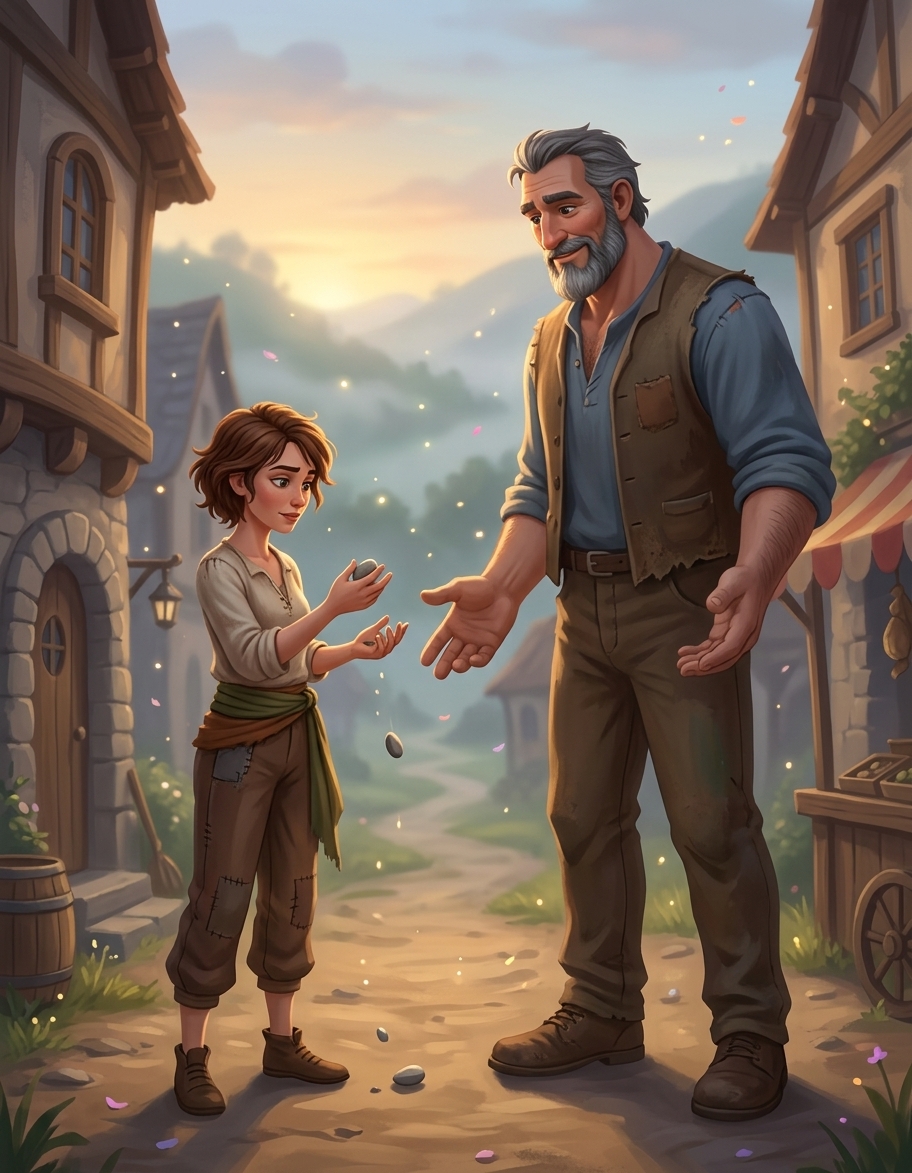
Liv teaches that letting go is the opposite of giving up—it's the moment you stop fighting what's real so you can actually do something about it.
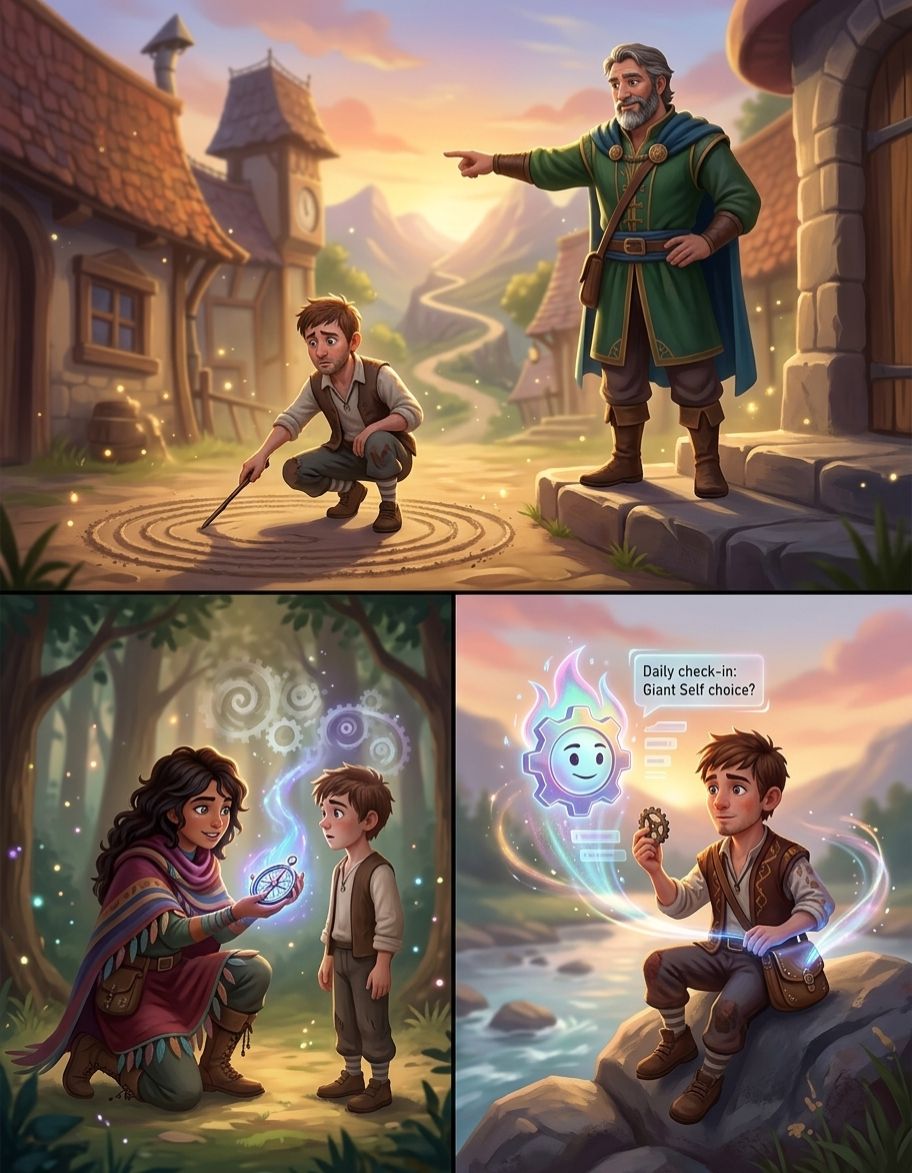
If you've landed on this blog and keep seeing the words "Small Self," "Giant Self," or "old programming" and have no idea what they mean, this post…

High performers hit income ceilings because they doubt their worth, not because the market won't pay. Learn why identity—not market analysis—determines.

We're curious—what's one small thing you did this week that felt like moving toward your Giant Self?