What Do You Actually Want in Life? A Practical Guide When You've Never Let Yourself Ask
Vision isn't something you think your way into—it's something you feel and allow.
The Tribe of Giants · October 8, 2026
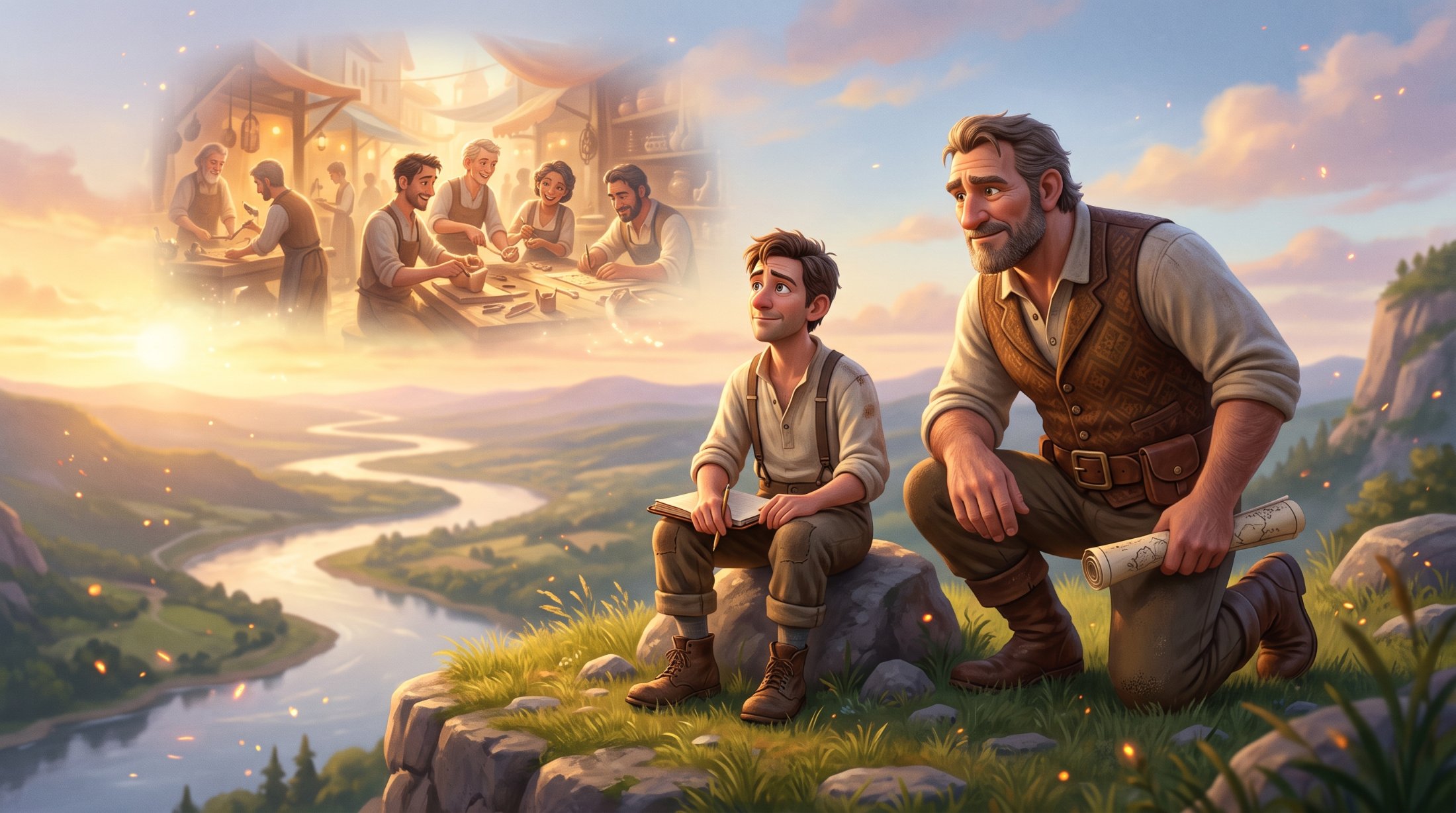
You can answer "what do I want?" and still feel nothing move. You've written the goals. Bigger income, better marriage, a body that doesn't ache, a business that doesn't need you every hour. You've said the words out loud, maybe even to a stranger. And the words sat there, flat, like a grocery list for a store you never visit.
That's not a motivation problem. It's a vision problem — and they are not the same thing.
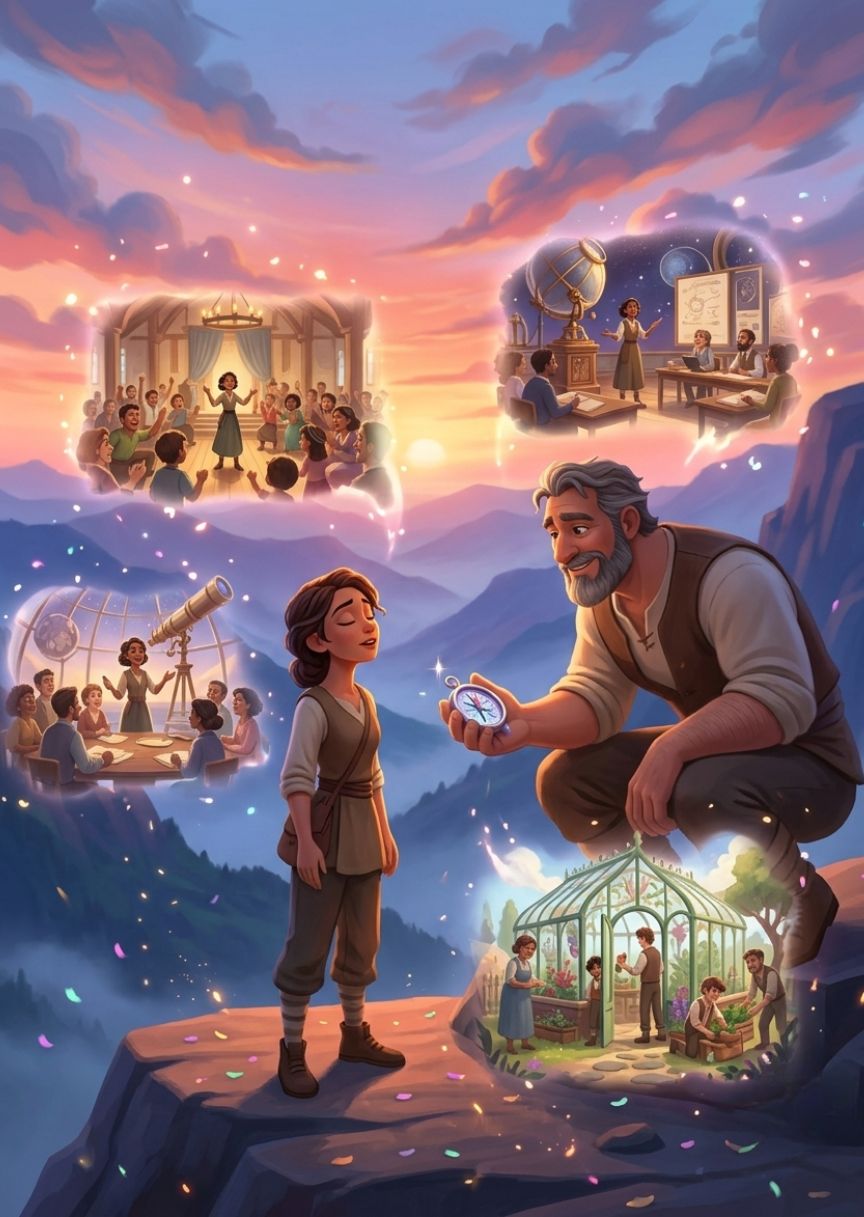
In the 12 Journeys, Journey 9 is Vision, guided by Drish. The teaching is simple to say and hard to do: you dream in detail until the future stops feeling like a wish and starts feeling like something you can remember happening. Not "I want to be successful." A Tuesday. What you're wearing. Who's in the room. What it smells like. What you say when someone asks how you're doing, and whether, for once, the answer is true.
Most people skip this step. They go straight from "I'm stuck" to "here's my five-year plan," and the plan never sticks, because a spreadsheet isn't a pull. A vivid, specific future is.
Ask yourself what you want and you'll get a category: happier, richer, calmer, closer. Categories don't give your body anything to reach for. They're too thin to act on and too abstract to miss.
The Journey 9 work with Ritt and Drish goes the other direction — toward specificity, not inspiration. Not "I want more freedom," but the actual morning: what time you wake up, whether you check your phone first, what the first hour looks like when nobody is demanding anything from you yet. The detail is the point. A vague future is easy to abandon because you never really had it. A detailed one is harder to walk away from, because some part of you has already been there.
A vision board collects images. Journey 9 asks for something closer to a rehearsal: you walk through a specific future scene, in detail, as if it already happened — then you come back and ask what has to be different about today for that Tuesday to be possible. That's the hinge. Vision without a return trip to the present is just daydreaming. The Journeys are built so vision feeds directly into the next real act, the kind you take in Giant Crossings — plan it, do it, report back, including the times you fall.
This is also where Rimi's daily check-ins do quiet, unglamorous work: not inventing your future for you, but asking the next question when you'd rather stop at the pretty picture. The path only moves if the vision gets checked against something you actually did that day.
Vision is Journey 9 for a reason. It sits after Grief, Acceptance, and Empowerment — after you've felt what needed feeling and claimed what power you already had. Dreaming in detail before you've done that work tends to produce fantasies built from fear: visions of proving someone wrong, outrunning a feeling, escaping a life instead of building one. The order matters. By the time you reach Drish, the vision you build is yours, not a reaction to someone else's opinion of you.
Why can't I picture a future for myself, even when I try? Often it's not a lack of imagination — it's that the exercise stayed too general. "A better life" gives your mind nothing to hold. Start smaller and more physical: one hour of one day, described in sensory detail, not in outcomes.
Is this the same as a vision board or manifesting? No. A vision board collects images; it doesn't ask you to return to the present and change anything. Journey 9's practice is a rehearsal with a built-in next step — you come back from the detailed future and name what today needs to look like because of it.
What if my vision changes once I start acting on it? It usually does, and that's expected. The point isn't to lock in a permanent picture — it's to give yourself something specific enough to move toward, then let the real acts you take (and report honestly, falls included) sharpen the picture further.
Do I need to know exactly what I want before I start the Journeys? No. Journey 9 comes well into the path on purpose — after Grief, Acceptance, and Empowerment. If you're still at "I don't know what I want anymore," that's Journey 1 territory, not a reason to wait.
How is this different from just setting SMART goals? A goal states an outcome. The Journey 9 practice builds the sensory, specific scene around that outcome first, so the goal has something pulling it forward instead of just a deadline pushing it.
You don't need the whole picture before you begin — Journey 1 comes first, and it's free. Start free — 30 days of All-Access, no card: all 12 journeys, Rimi, the Mirror, the whole Giant Crossings game, full check-ins, and the Giant Library.
Vision isn't something you think your way into—it's something you feel and allow.
Scarcity mindset lives in your nervous system, not your thoughts. When you create—badly, messily, imperfectly—you shift from a defensive state…
A practical, step-by-step method for gratitude when life is hard — not a mindset reframe, a concrete practice for days when nothing feels good.
Rimi is big enough to rescue Ritt, and he never does. What the Giant's restraint teaches about becoming a Giant yourself, one journey at a time.
Empowerment isn't something you wait to feel. It's a decision you make, over and over, in small moments—when you stop asking for permission and start…