
How to Change Your Life at 40: It's Not About Discipline—It's About Identity
Feeling lost at 40 isn't a productivity problem—it's an identity problem. Here's why the pattern breaks when you rebuild who you actually are.
The Tribe of Giants · September 22, 2026

There is a particular kind of disorientation that hits when something big changes in your life. The routine you moved through without thinking is suddenly gone. The role you knew yourself by no longer fits. The version of you that made sense last year feels blurry, maybe even out of reach. If you are in that place right now, coping with a major life change and trying to stay recognizable to yourself while everything shifts, what you are feeling is not weakness. It is your nervous system and psychology responding exactly as they are designed to when the familiar disappears.
Many people fall into one of two patterns during transitions: white-knuckling through it alone, convincing themselves that needing support is a failure, or consuming so much coping advice that they drown in it without applying any of it. This article is neither of those things. It is a clear, honest guide to regulating your emotions, anchoring your identity, and building the kind of support that actually holds during a transition. For those who want a community walking beside them rather than content to consume in isolation, there are structures built exactly for that, and you will find one of them mentioned before this article is done.
During a major life transition, grief, anxiety, anger, numbness, unexpected relief, and guilt can all show up in the same week, sometimes in the same hour. That is not a sign of confusion. It is a sign you are processing something real and layered. Many people interpret mixed emotions as evidence they are coping badly, when in fact the opposite is true: a flat, clean response to significant change would be the unusual thing.
In the early weeks, shock and irritability tend to dominate. The brain is working hard to recalibrate, and that takes energy. Anger often surfaces around four to eight weeks in as the initial numbness wears off. Grief can feel like it belongs only to bereavement, but it shows up after job loss, divorce, relocation, and identity shifts just as reliably.
There is no single correct timeline, but there is a useful general shape to understand. Acute distress, the sharp, destabilizing kind, often begins to soften within weeks to months as the nervous system adjusts. For major losses and transitions, grief can remain active in waves for six to twenty-four months, and in some cases longer. That is within a normal range, not evidence that something is wrong with you.
The important signal to watch for is direction. If symptoms are getting worse rather than better after four weeks or more, and especially if they are interfering with daily functioning, that is information worth taking seriously. A timeline is a map, not a deadline.
During the first phase of any major transition, the nervous system is activated. Cognitive strategies (reframing, planning, analyzing) often feel out of reach precisely when you need them most. This is why body-based practices matter so much in early adjustment. Slow breathing, a five-senses grounding exercise, or five minutes of intentional movement can shift your physiological state enough to make clearer thinking possible.
The goal here is not an elaborate wellness ritual. A brief daily tool, practiced consistently, is more likely to build resilience than a complex routine used once and abandoned. Slow your exhale to twice the length of your inhale. Look around and name five things you can see. These are small inputs, but they tell the nervous system that the immediate environment is safe.
There is a difference between emotional venting on a page, which can provide temporary release, and reflective writing that actually builds clarity. The more useful version asks questions: "What am I actually afraid of here?" and "What hasn't changed about who I am?" Pennebaker's research on expressive writing consistently shows that it reduces distress and helps people find meaning within difficult experiences, which is a different outcome from simply releasing steam.
If you want a private, structured space for this kind of reflection, The Tribe of Giants offers a tool called the Mirror: a body-led reflection prompt designed for the kind of processing that goes deeper than a vent, with your own journal as the only record you keep.
Acceptance-based coping, sitting with discomfort rather than immediately trying to fix or escape it, is consistently associated with less anxiety during transitions. Approaches like Acceptance and Commitment Therapy (ACT) have built a strong evidence base around exactly this principle. Acceptance is not resignation. It does not mean deciding the change is fine or that you endorse what happened. It means stopping the fight against what is currently true long enough to work with reality instead of against it.
A suggested starting point: name one thing in your situation that is genuinely uncertain, and practice sitting with that uncertainty for a full day before acting on it. Notice that you can tolerate it. That tolerance is something you can build.
When external structures collapse, a job title, a relationship, a home, a familiar city, internal values become the most reliable navigation system available. Take some time to name three to five values that have been true across every season of your life. Not aspirational ones. The ones already there, evidenced by your choices even when they were costly.
Decisions made from those values, even small ones, rebuild your sense of agency when the larger picture feels chaotic. Dealing with life transitions becomes more manageable when you have something stable to orient from.
The psychology behind tiny rituals is straightforward: consistency signals safety to the brain. A reliable wake time, a short walk, a meal eaten without a screen, none of these solve the big problem, but they create a felt sense of stability even when the larger picture is uncertain. Clinicians working with people in upheaval consistently identify two or three daily anchors as the minimum viable scaffold from which adjustment can happen.
The purpose of these anchors is not productivity. It is physiological and psychological grounding. Do not choose them based on what sounds impressive. Choose them based on what you can actually sustain when things are hard.
Cognitive reframing is not toxic positivity. It is not pretending the situation is good or denying the loss. It is examining whether the current narrative is the only true one. A career loss can also be a release from something that was costing you more than it gave. A relocation can also be a reset. Ask yourself: "What does this change make possible, even if I did not choose it?" You are not required to feel grateful for the disruption. You are simply allowed to hold more than one true thing at once.
Isolation amplifies distress, shrinks perspective, and cuts off the accountability that sustains any coping practice over time. For high achievers especially, the instinct to "figure it out alone first" is deeply ingrained. It can become a liability during transition, precisely because independent problem-solving is less effective when the problem is the self. Structured peer support programs have shown meaningful reductions in depression, anxiety, and stress during major life changes, with some meta-analyses reporting medium to large effects.
Vague advice to "talk to someone" rarely gets implemented. A more useful frame: schedule at least one genuine connection per week, ask for specific help rather than accepting general offers, and consider whether the communities you are in are built around shared growth rather than just shared crisis. The quality and structure of the support matters as much as the presence of it.
This is where The Tribe of Giants enters the picture directly. It is a platform built for people navigating exactly this kind of transition: a real peer community with a feed, direct messaging, and events. Combined with Rimi, an AI guide grounded in the platform's 12-journey framework, it is designed to support your specific challenge. Rather than waiting for a weekly session, Rimi is available in the moment when the transition is actually happening.
Most resources for managing life transitions are either expensive one-on-one coaching or solitary apps. The Tribe of Giants takes a different approach. Daily check-ins reflect your patterns back to you over time. A genuine peer community walks beside you rather than just consuming the same content in parallel. And a 12-journey curriculum, organized across three growth seasons called Roots, Shoots, and Fruit, gives the transition a structured path rather than just a waiting room.
You do not have to reconstruct a support network from scratch. A structured one exists. The platform offers a free entry point, so you can explore the community and see whether it fits before making any commitment.
Write down the transition in plain language. Then list what is still true: relationships that remain, skills you still carry, values that have not shifted, responsibilities that continue. This one step interrupts the cognitive distortion where a single major change begins to feel like everything is gone. The contrast between what changed and what endures is the foundation of adjustment.
Pick two or three non-negotiable daily habits for the next two weeks. A consistent wake time, one proper meal, one form of movement or reset. These are not aspirational additions to your day. They are the base from which everything else rebuilds. The word "minimum" is doing important work here: choose anchors you can maintain even on the worst days, not the ones that look best on paper.
During a major transition, decision fatigue is real and it compounds stress. A "must do today" list capped at three genuine priorities prevents the failure cycle of an overloaded list that never gets done. Batch the stressful administrative tasks, email, paperwork, hard calls, into one defined window rather than letting them bleed across the entire day. This single habit reduces the psychological weight of the day significantly.
Obsessive daily self-evaluation during a transition increases anxiety rather than reducing it. A weekly review, keep what worked, drop what did not, add one new habit at a time, builds sustainable momentum without the whiplash of recalibrating every 24 hours. Give practices enough time to actually work before you discard them.
Some experiences during a transition require professional care, not more self-directed coping. The clearest signals: suicidal thoughts or any self-harm, inability to manage basic self-care or daily responsibilities, symptoms that are worsening rather than improving after several weeks, increased reliance on alcohol or substances, severe hopelessness, and physical symptoms like chronic headaches, sleep disruption, or appetite loss becoming a consistent pattern. These are not signs of failure. They are information, the same way a physical symptom signals when to see a doctor.
Professional support during a transition can take several forms: therapy, coaching, or a structured platform that complements existing therapeutic work. The Tribe of Giants is designed to work alongside professional care, with options to connect with certified coaches or integrate the support of a therapist you are already working with. Seeking that support during a major life change is not a sign of collapse. It is a strategic use of available resources at the moment they are most needed.
Coping with a major life change is not about reaching a place where the transition stops hurting. It is about staying connected to yourself while the external picture shifts. The disorientation you felt at the beginning of this article is real, but it is not permanent, and it is not the whole story of what this period means for you.
You now have a fuller picture of what normal looks like emotionally, a set of concrete strategies for the emotional adjustment to change and anchoring your identity, a four-step plan to stabilize your days, and clear signals for when to reach for professional help. That is a real toolkit, not a collection of platitudes.
Navigating a major life transition alone is optional. Whether through trusted people in your life, a therapist, a coach, or a structured community like The Tribe of Giants, the destination is the same: moving through this change with more clarity, less isolation, and a stronger sense of who you are on the other side. The tribe exists. You are welcome in it.
Feeling lost at 40 isn't a productivity problem—it's an identity problem. Here's why the pattern breaks when you rebuild who you actually are.
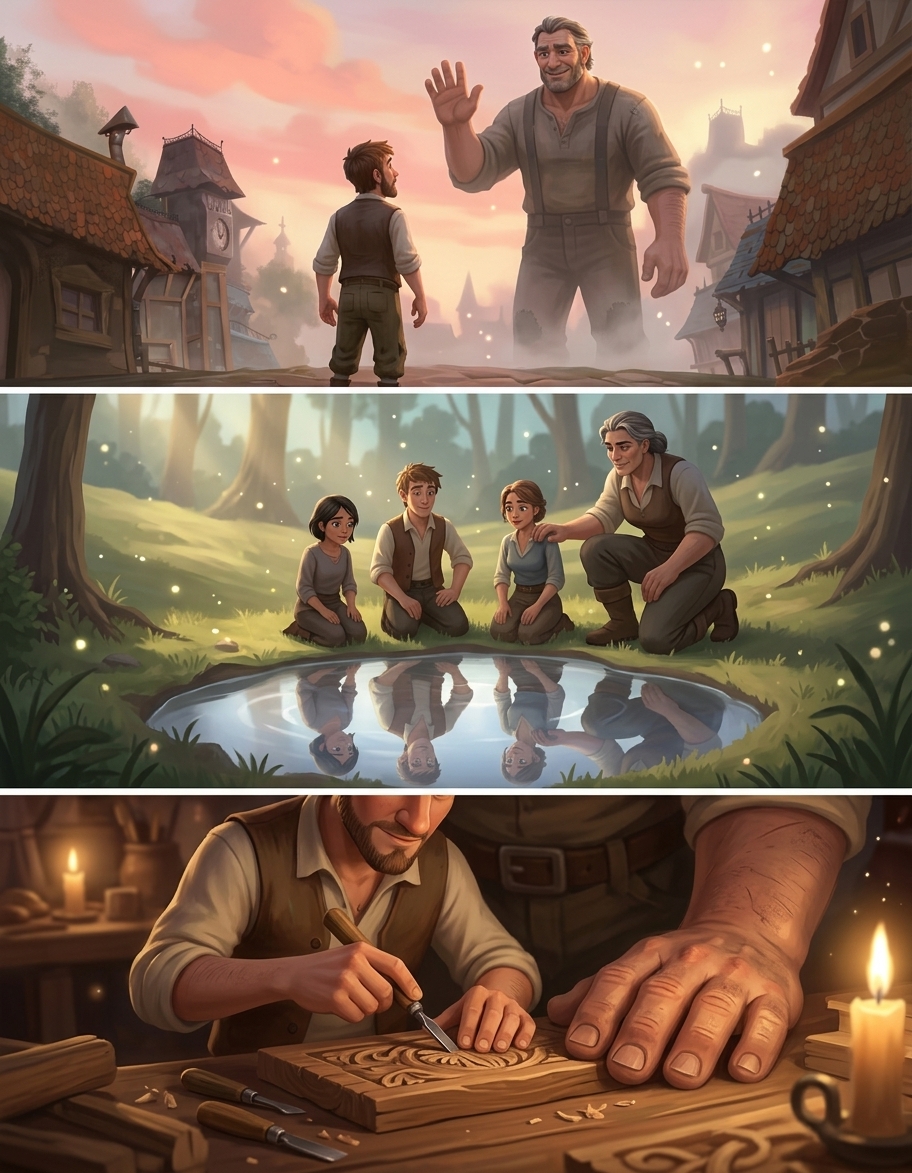
That nagging sense that something's missing—the one you've been pushing down or trying to logic away—isn't a problem to solve. It's a signal.

You've tried harder. You've made resolutions, set goals, downloaded the productivity app.

Vision isn't something you think your way into—it's something you feel and allow.

When you join the Tribe of Giants, you're stepping into a community built on one core belief: identity shifts are the foundation of real change.