← Giant Brain Candy
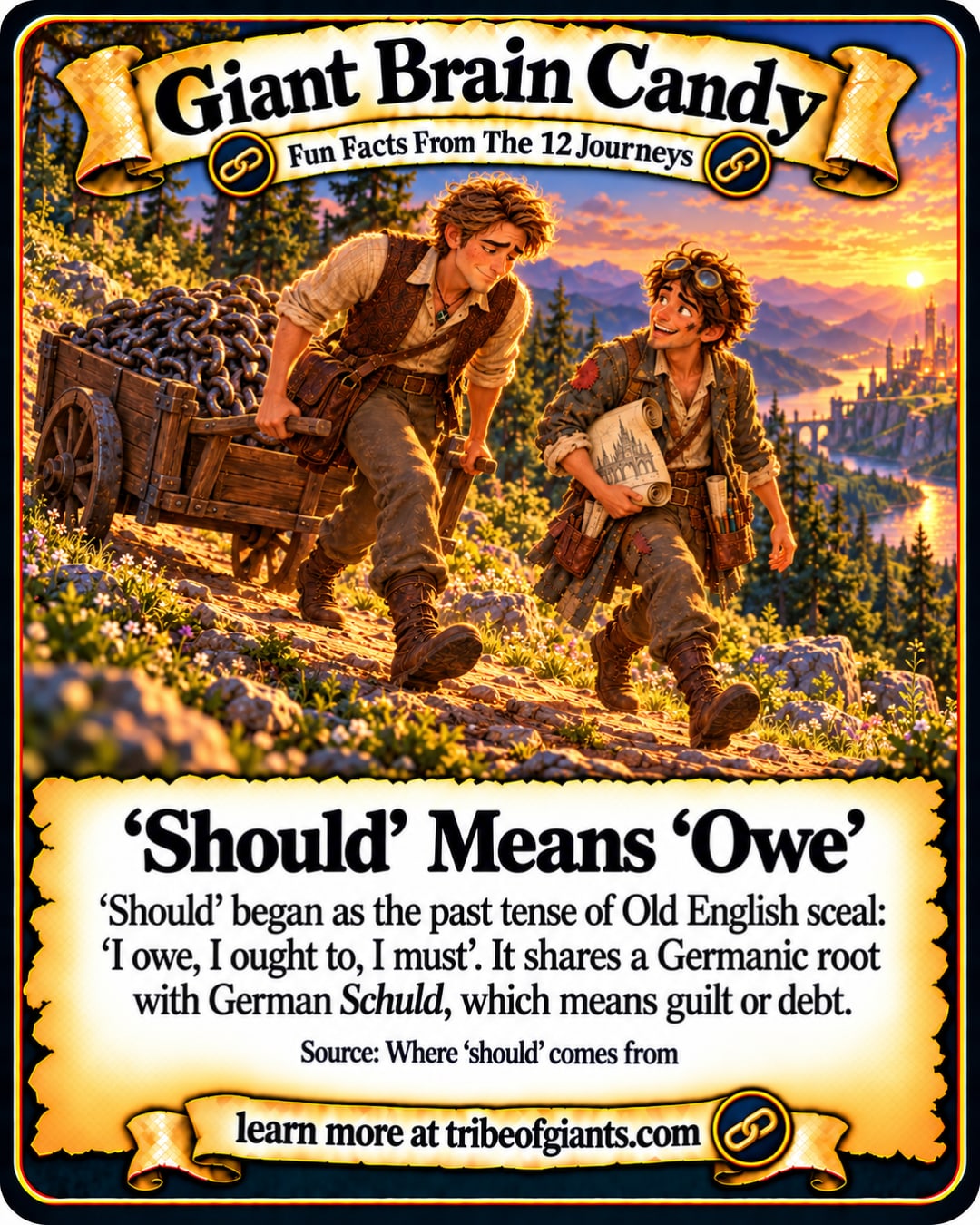
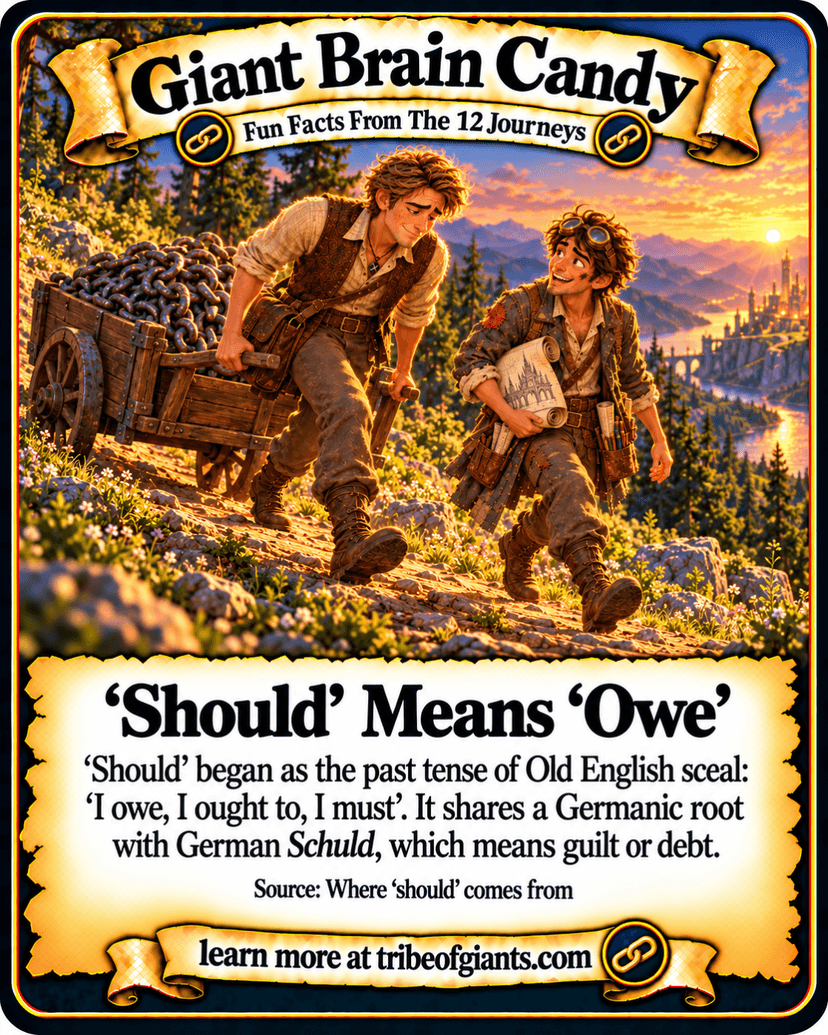
Giant Brain Candy: ‘Should’ Means ‘Owe’. ‘Should’ began as the past tense of Old English sceal: ‘I owe, I ought to, I must’. It shares a Germanic root with German Schuld, which means guilt or debt. Source: Where ‘should’ comes from.
Strong evidenceThe research
  1. Harper, D. (n.d.). Shall (v.); Should (v.). In Online Etymology Dictionary. Retrieved September 26, 2026, from https://www.etymonline.com/word/should

Journey 9 · Vision

‘Should’ Means ‘Owe’

‘Should’ began as the past tense of Old English sceal: ‘I owe, I ought to, I must’. It shares a Germanic root with German Schuld, which means guilt or debt.

Source: Where ‘should’ comes from · Strong evidence

Share this card

Instagram or TikTok: download the picture and post it.

30 days of All-Access, free — every journey and every feature. No card.

Start free — 30 days of All-Access

More from Vision

Giant Brain Candy: Remembering the Future. Imagining a moment in your own future uses much of the same brain network as remembering your past. Scientists call it the prospective brain. Source: The prospective brain.
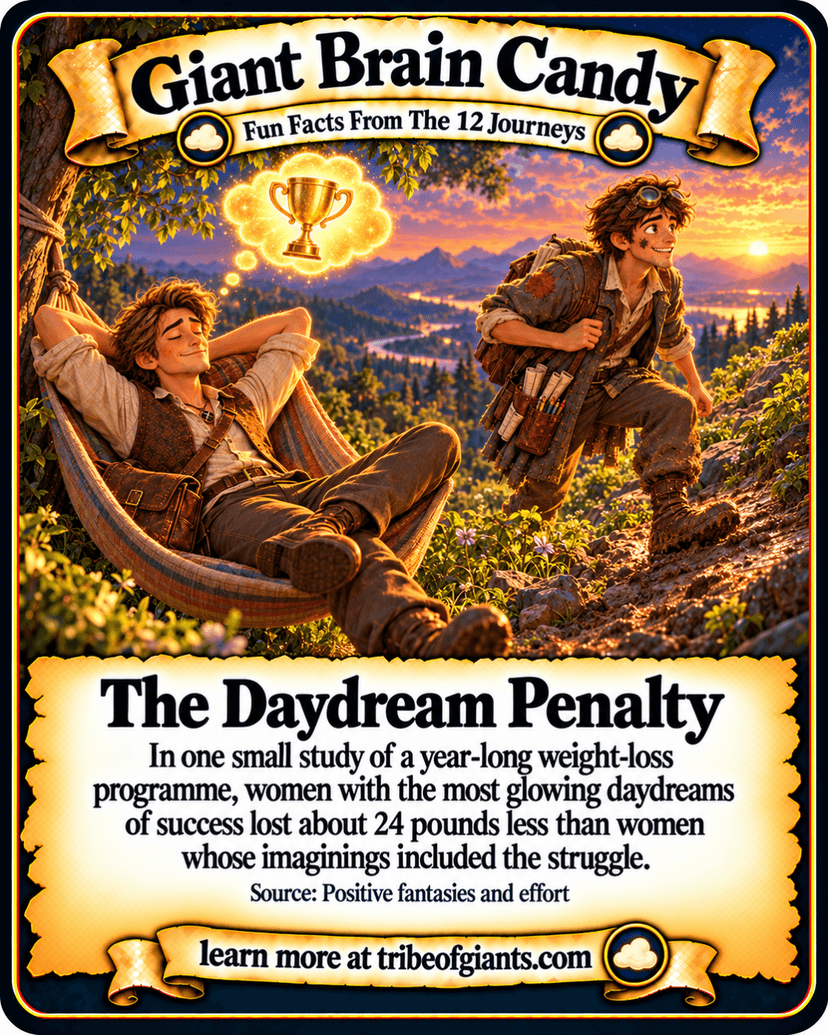
Giant Brain Candy: The Daydream Penalty. In one small study of a year-long weight-loss programme, women with the most glowing daydreams of success lost about 24 pounds less than women whose imaginings included the struggle. Source: Positive fantasies and effort.
Giant Brain Candy: Picture the Path, Not the Prize. In the week before an exam, people who spent five minutes a day picturing how they would study scored nearly eight points higher than controls. Picturing the top grade added only about two. Source: Process versus outcome simulation.
All of Vision’s Brain Candy, and every other journey’s →