← Giant Brain Candy
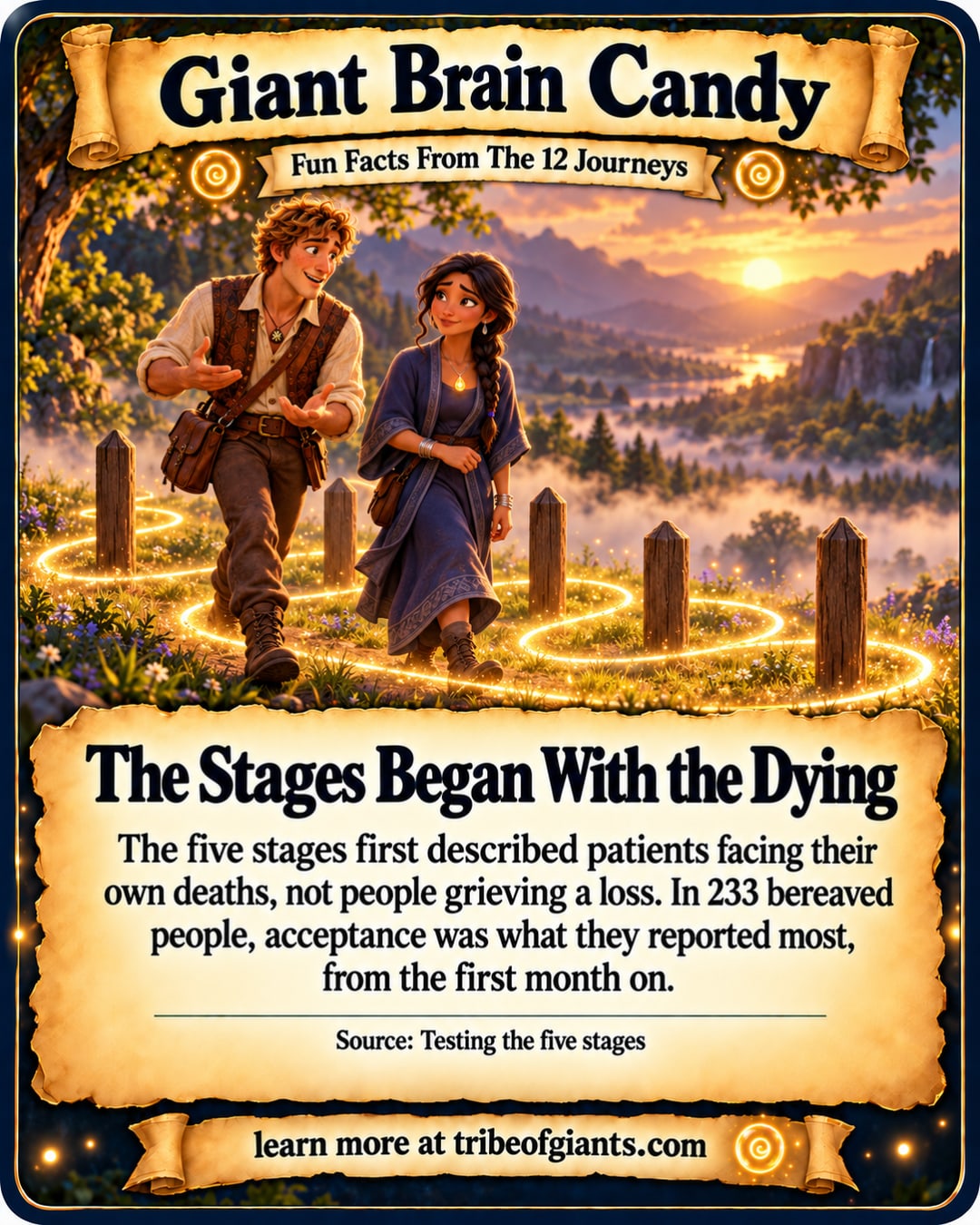
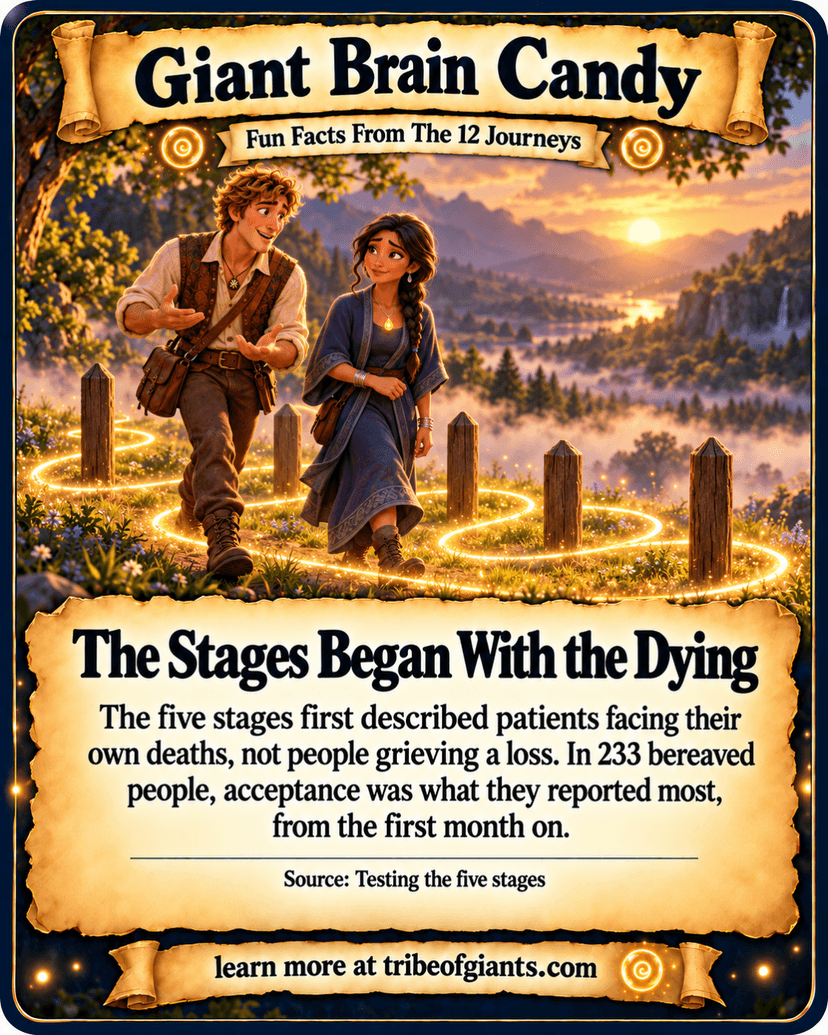
Giant Brain Candy: The Stages Began With the Dying. The five stages first described patients facing their own deaths, not people grieving a loss. In 233 bereaved people, acceptance was what they reported most, from the first month on. Source: Testing the five stages.
Growing evidenceThe research
  1. Kübler-Ross, E. (1969). On death and dying. Macmillan.
  2. Maciejewski, P. K., Zhang, B., Block, S. D., & Prigerson, H. G. (2007). An empirical examination of the stage theory of grief. JAMA, 297(7), 716–723.

Journey 3 · Grief

The Stages Began With the Dying

The five stages first described patients facing their own deaths, not people grieving a loss. In 233 bereaved people, acceptance was what they reported most, from the first month on.

Source: Testing the five stages · Growing evidence

Share this card

Instagram or TikTok: download the picture and post it.

30 days of All-Access, free — every journey and every feature. No card.

Start free — 30 days of All-Access

More from Grief

Giant Brain Candy: Bending Without Breaking. Following people from years before a spouse died to 18 months after, researchers found resilience was the most common pattern: real sorrow, with daily life holding its shape. Source: Resilience after loss.
Giant Brain Candy: A Word Born Heavy. The English word grief comes, through Old French, from the Latin gravare, ‘to make heavy’, which comes from gravis, ‘weighty’. Source: The roots of the word grief.
Giant Brain Candy: Grief as a Kind of Learning. Grief researcher Mary-Frances O’Connor describes grieving as a form of learning: for years your brain expected someone to be there, and updating that takes time and lived experience. Source: Grieving as learning.
All of Grief’s Brain Candy, and every other journey’s →