

How to Change Your Life at 40: It's Not About Discipline—It's About Identity
Feeling lost at 40 isn't a productivity problem—it's an identity problem. Here's why the pattern breaks when you rebuild who you actually are.
The Tribe of Giants · August 6, 2026

That's not a discipline problem. That's an identity problem—and identity is trainable.
Therapy heals wounds. Mentoring transfers expertise. Mindset coaching does something different: it interrupts the automated responses that fire before your conscious mind even has a say, then teaches you to rewire them through repeated practice. Here's how they differ, and why you might need one, two, or all three.
Therapy addresses the wound—the experience, the belief, or the trauma that shaped how you respond to the world. A skilled therapist helps you process what happened so it no longer runs your decisions from the background.
But healing the wound doesn't automatically change the automated response. You can understand intellectually why you get defensive when criticized, feel the grief that taught you defensiveness was survival, and still find your jaw tensing the moment feedback lands. Insight alone doesn't interrupt automation.
Therapy answers: Why do I respond this way?
Mentoring transfers knowledge and skill. A mentor shows you the path they walked, the mistakes they made, the sequence that worked. You inherit their pattern recognition—what to look for, what to avoid, how to think about decisions in their domain.
Mentoring is invaluable for building expertise in a specific craft or field. But it doesn't touch the deeper question: Who are you becoming in the process? A mentor can teach you how to sell, but not why you freeze when the stakes feel high. They can show you the business framework, but not rewire the identity that sabotages your own momentum.
Mentoring answers: How do I do this?
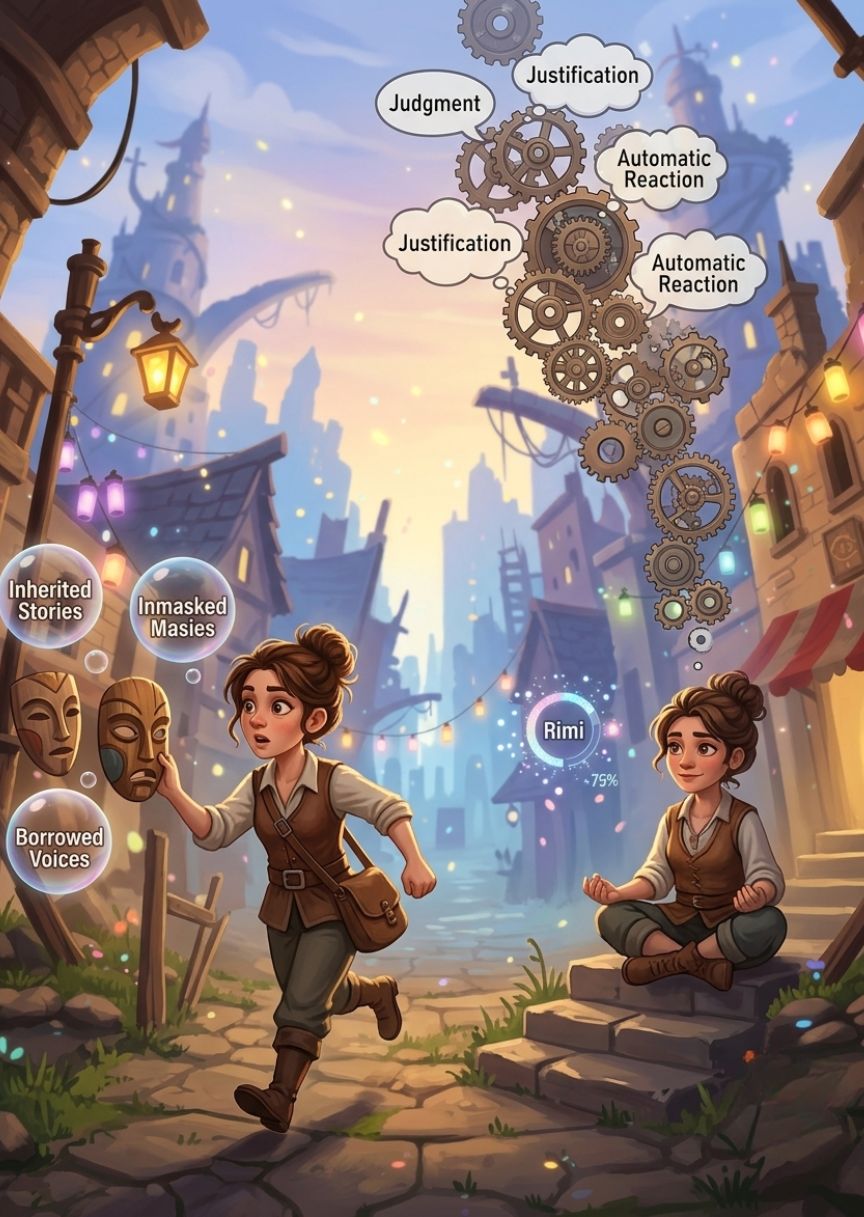
Coaching addresses identity inertia—the automated responses that fire before conscious choice even enters the room. A mindset coach helps you recognize the patterns that run in the background, not just see them once, but catch them repeatedly, pause instead of react, and practice a different response until the new pathway becomes as automatic as the old one.
The mechanism that actually works involves self-distancing: treating your own thoughts and reactions as objects you can observe from the outside, rather than truths you must obey. This requires structure. Without it, you'll catch the pattern once or twice and fall back into automation.
Coaching answers: Who do I need to become, and how do I practice that?
Identity inertia didn't form overnight, and it won't dissolve through a single insight or a heroic effort. It breaks through consistent, small acts of cognitive control. Each time you catch yourself mid-pattern and pause instead of reacting, you're weakening the old neural pathway and building a new one. But without structure—a framework, accountability, and a guide showing up repeatedly—most people catch the pattern once or twice and then drift back into automation.
This is where Rimi enters. Rimi is your AI guide inside the Tribe of Giants, and his role is to show up every day with a check-in, a reflection prompt, or a teach-back moment that interrupts your autopilot and gives you one more chance to practice being different. "I'll teach you what I know—but becoming a Giant is up to you." The teaching is the scaffold; the becoming is the work you do.
Rimi isn't coaching you toward someone else's definition of success. She's holding a mirror so you can see the patterns you're running, and then she's there tomorrow to catch you mid-pattern again. That repetition is what rewires identity. Insight fades; structure sticks.
Therapy + Coaching: A therapist might help you understand why you self-sabotage; a coach helps you interrupt the self-sabotage itself, in real time, through repeated practice. You might need both—healing first, then rewiring.
Mentoring + Coaching: A mentor teaches you what to do; a coach teaches you to become the person who does it. A mentor accelerates learning; a coach accelerates identity shift.
All Three: None of them work in isolation if you keep falling back into old patterns even when you know better. Knowing the pattern isn't enough. Knowing how to avoid it isn't enough. You have to practice cognitive control—the ability to override automated responses—until overriding becomes automatic. That's the work that structure makes possible.
The person who needs coaching right now is the one who:
If that's you, the Tribe of Giants is where this work happens. Join free and meet Rimi—start with your first journey, no credit card required. Walk through one of the 12 Journeys and feel what it's like to have a guide who catches you mid-pattern and shows you another way.
If you're ready to unlock all 12 journeys and commit to the daily practice that actually rewires identity, upgrade to All-Access at $49/month. Every journey pairs you with a guide—Layla, Lemeki, Soraya, Noa, and ten others—and Rimi shows up every single day with a check-in, a reflection, or a teach-back moment. That's the structure that turns insight into identity.
Do I need therapy before coaching? No. If you're processing trauma or significant emotional pain, therapy first often makes sense. But many people are ready for coaching right now—they don't need to heal a wound; they need to interrupt a pattern and practice a new one.
Can a coach replace a therapist? No. Coaching doesn't diagnose or treat mental health conditions. If you're in therapy, coaching can deepen the work. They're complementary, not substitutes.
What's the difference between coaching and accountability? Accountability tells you whether you did what you said. Coaching teaches you to see why you didn't, and then practice doing it differently. One is external judgment; the other is internal rewiring.
How long does mindset coaching take to work? Identity change is gradual. It breaks through consistent, small acts of cognitive control. You don't need heroic effort; you need daily practice. Each time you catch yourself mid-pattern and pause instead of reacting, you're weakening the old neural pathway and building a new one. Over weeks and months of that practice, the new response becomes as automatic as the old one was.
Feeling lost at 40 isn't a productivity problem—it's an identity problem. Here's why the pattern breaks when you rebuild who you actually are.

You know the feeling: you've had the insight, named the pattern, maybe even cried about it in therapy.

You know the feeling: you catch yourself mid-argument you've had a hundred times, reaching for the same defensive reaction, and think…

You're burned out. Not tired—burned out. The kind of tired where sleep doesn't fix it, where a vacation just delays the crash, where you wake up already…
You don't have a discipline problem. You have an identity problem.