TL;DR: Creative expression interrupts the nervous system's default automation by shifting you from defensive reactivity into generative presence—a state where identity rewiring becomes possible. The shift isn't permanent from a single session; identity change requires repeated practice that contradicts the old script. Every time you sit down and make something, you're weakening the pathway that says "this is who I am" and building evidence for "this is who I'm becoming."
The Gap Between Noticing and Breaking
You know the pattern. You've named it, journaled it, maybe even paid someone to help you see it clearly. And yet—your chest still tightens in certain moments. Your hands still freeze. Your nervous system still runs the old automation.
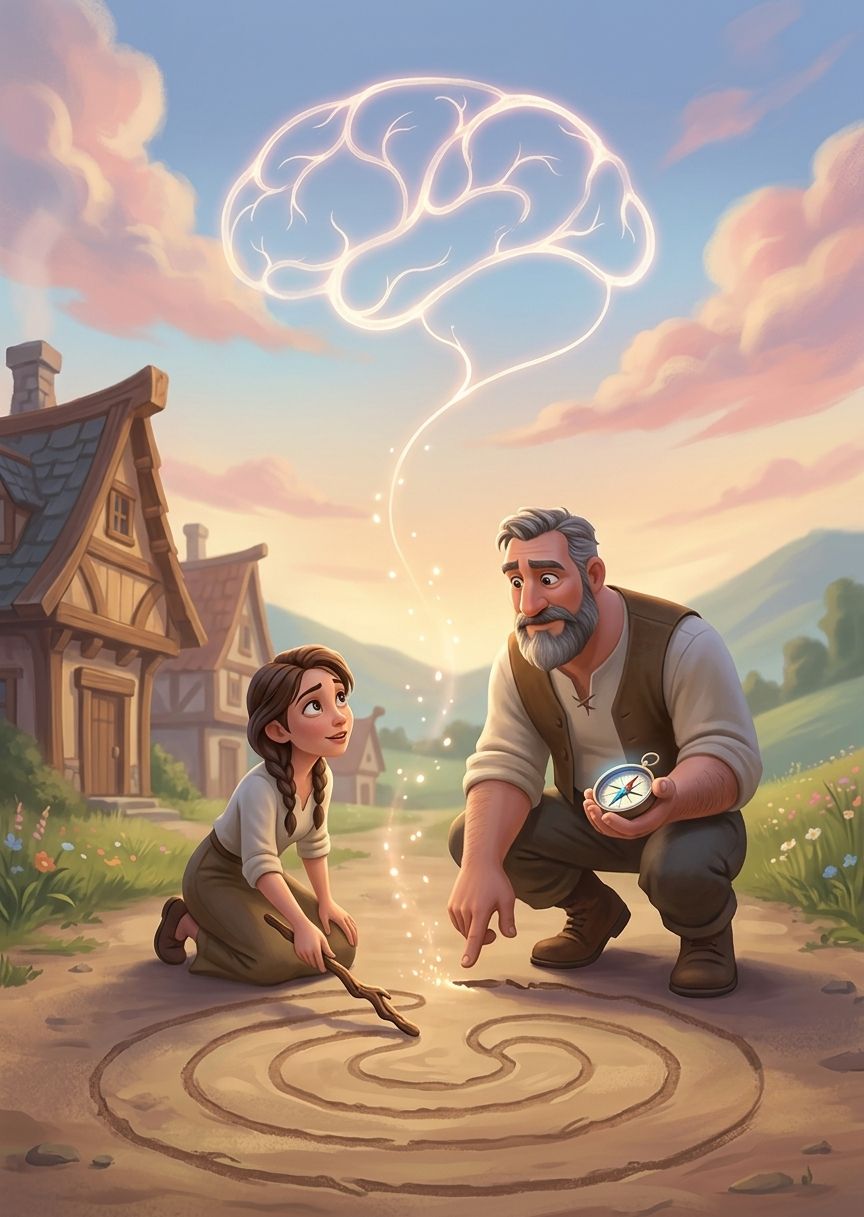
This is the gap between intellectual awareness and embodied change. You can understand that a voice isn't yours and still feel like it is, because understanding doesn't rewire the neural pathways that formed the pattern. Those pathways only dissolve through practice—through repeated, felt, moment-by-moment experience that proves the old script isn't running anymore.
Most people try to close this gap through more thinking: deeper analysis, better affirmations, clearer intentions. But your nervous system doesn't learn from insight alone. It learns from doing—from actions that contradict the old narrative.
This is where creative expression becomes a precision tool.
Why Art-Making Shifts Your Nervous System State
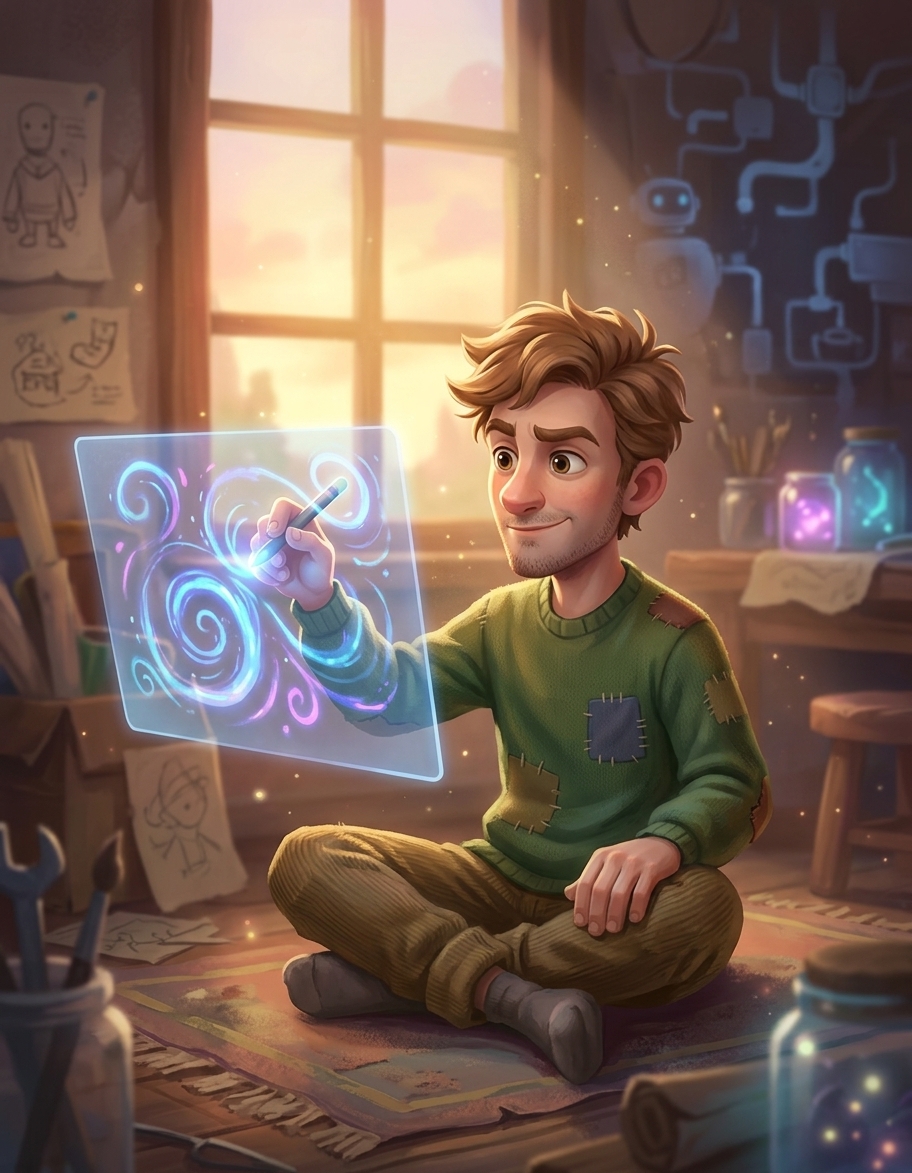
When you're immersed in making something—drawing, writing, building—something neurologically incompatible with threat-response has to happen. You cannot be in full defensive reactivity (bracing, protecting, running the old loop) and simultaneously be present enough to create. One of them has to yield.
When you choose the creative act, your attention narrows. Your hands move. Your focus tightens to the present moment. In that narrowing, the default-mode network—the part of your brain that runs automated thoughts and old programming—shifts its state. Your nervous system moves from defensive (threat, protection) to generative (building, making, creating).
This is a real shift in your actual nervous system state, and it happens every time you sit down to make something.
The Identity Shift: From Observer to Maker
But here's what most people miss: a nervous system reset isn't the same as identity rewiring.
Drawing for an hour feels calming, clarifying, more like yourself. The effect is real—and temporary. Once you step away, the old neural pathways are still there. The automation can return.
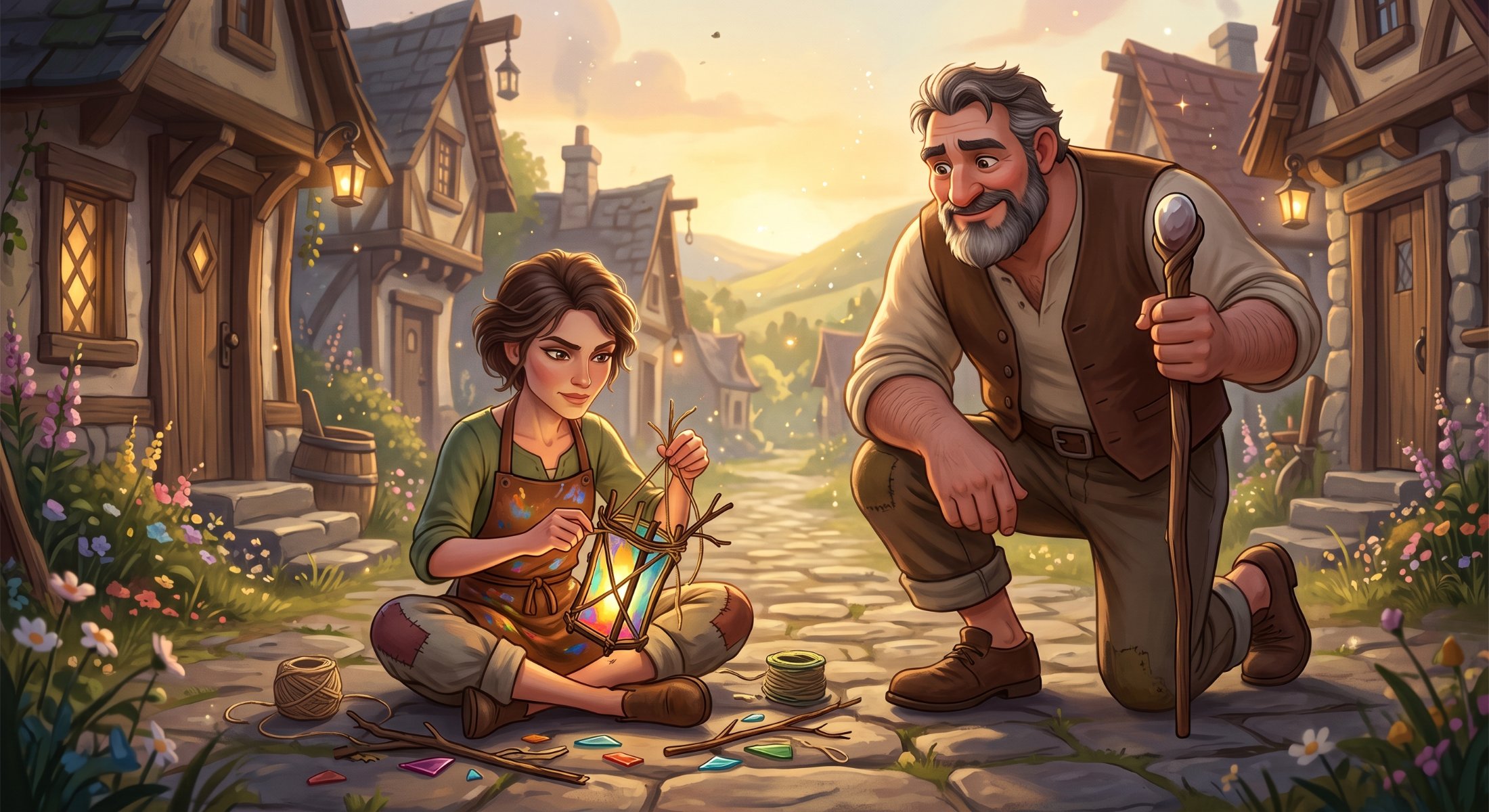
Identity rewiring requires something more: repeated practice in a generative state that directly contradicts what the old script says about you. "I can't create." "I'm broken." "I'm not the kind of person who makes things." Each time you sit down and make something—badly, messily, imperfectly—you're building evidence that contradicts the old narrative.
Your hands know before your mind does. When your hands move and something emerges, your nervous system learns: this version of me exists and is available now.
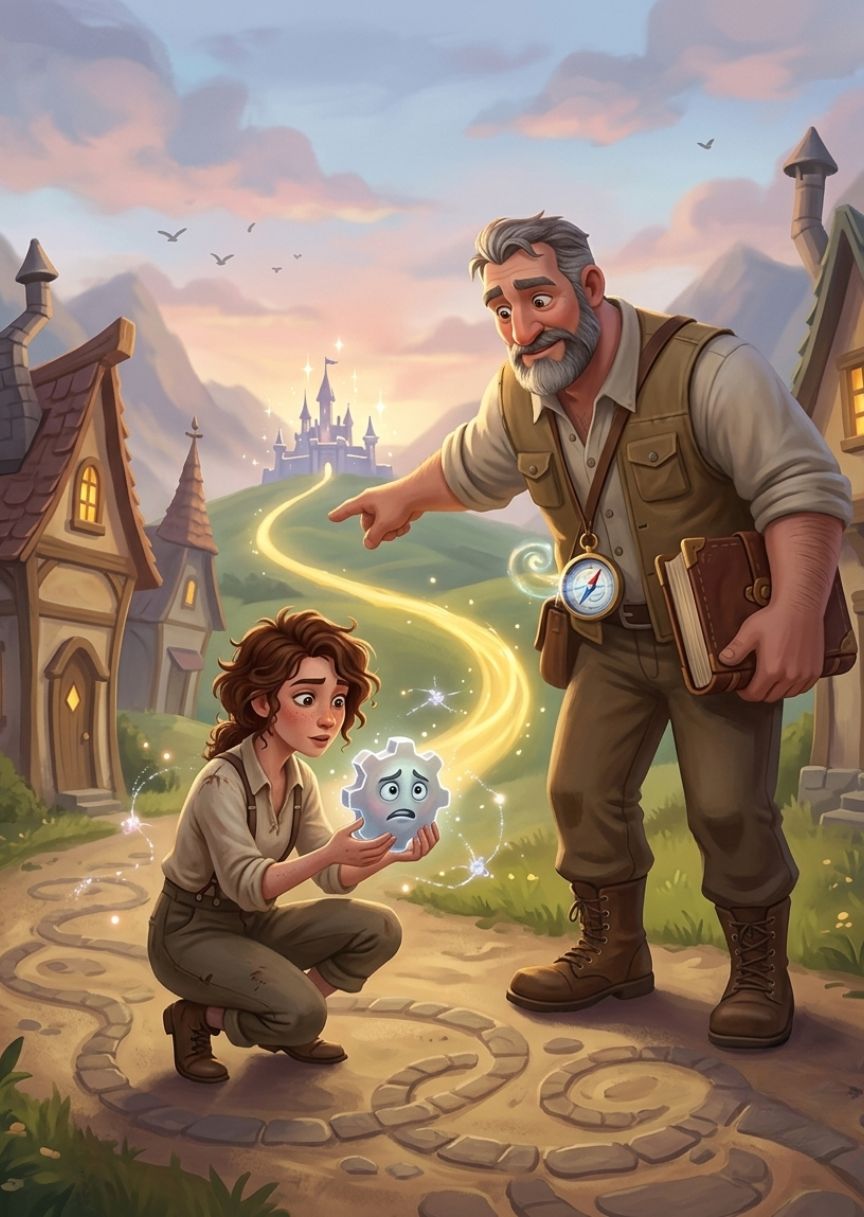
Every time you act, the old pathway weakens slightly. New pathways form. Your nervous system learns that you're not the person the old script said you were. Weeks of consistent practice, and the old voice doesn't have the same pull. Months in, you realize you're thinking and choosing differently—not because you tried harder to think differently, but because you did something different in a state of calm.
Where This Lives in the 12 Journeys
Creative expression as identity rewiring is foundational to Journey 8: Abri—Creation and Resourcefulness. But it's woven through every journey, because every identity shift requires you to do something that contradicts the old story.
In the ROOT journeys—where you're learning to notice what runs in the background—creative expression is how you move from observing the pattern to interrupting it. In the SHOOT journeys, it's how you build evidence that you can act even with uncertainty. In the FRUIT journey, it's how you practice the identity of someone who creates meaning that lasts.
The framework doesn't do the rewiring. Your hands do. The framework just makes sure you show up long enough for your nervous system to learn.
The Non-Negotiable Part
This works only if you actually do it—not think about it, not plan it better, not wait until you're ready. The moment you decide to move, something changes in how you relate to your own identity.
You're no longer just thinking about being different. You're being different—building evidence that contradicts the old narrative. The identity shift follows the practice, never the other way around.
Here's what this looks like in motion:
-
Name what you're rewiring. Not "be more creative," but something specific: "I want to move through my day without my chest tightening." "I want to sit with discomfort and not abandon myself." "I want to be someone who creates even when it's imperfect."
-
Commit to a specific, repeatable action. Not a vague "create more." Something concrete: "Three times a week, I sit with my hands and paper for twenty minutes, no outcome required." "Before the meeting, I spend ten minutes drawing to remind my nervous system that I'm generative, not just defensive."
-
Do it in a state of calm. Not when you're panicked or desperate—that's defensive. When you're settled enough to actually create. The state matters as much as the action.
-
Repeat until the old script loses its grip. Weeks in, you'll notice the voice doesn't have the same pull. Months in, you realize you're thinking differently—not because you forced yourself to, but because you practiced a different version of you.
A Different Kind of Practice
You don't have to figure out the Tribe alone. This is where the community and Rimi matter. You need a mirror—someone (or something) that sees the new version of you forming and reflects it back. That recognition accelerates the rewiring. It says: yes, this is who you're becoming.
But the work itself is solitary. It's your hands. Your attention. Your nervous system learning that it's safe to be generative, not just defensive.
Start small. Sit down today and make something—anything. Not perfectly. Not with confidence. Just with your hands moving and your attention there. Your nervous system will do the rest.
FAQ
Q: How long before this actually rewires identity?
A: You feel the nervous system shift (calmer, more present) immediately after a creative session. Identity rewiring—where the old pattern has genuinely less grip on you—takes weeks of consistent practice. The more you repeat the action, the weaker the old pathway becomes.
Q: Does it matter what I create?
A: No. A sketch, a paragraph, a collage, a written rant—the medium doesn't matter. What matters is that your hands move and your attention is present. The "quality" of the creation is irrelevant; the quality of the practice is everything.
Q: What if I don't consider myself a creative person?
A: That's the whole point. You don't have to be creative; you just have to create. The identity of "creative person" builds from the practice, not before it. The first time you sit down and make something is the moment you become creative.
Q: How does this connect to the rest of the 12 Journeys?
A: Every journey asks you to practice a new identity. Creative expression is the mechanism that makes that practice work—it's how you prove to your nervous system that change is possible, one action at a time.
👉 Start your first journey free