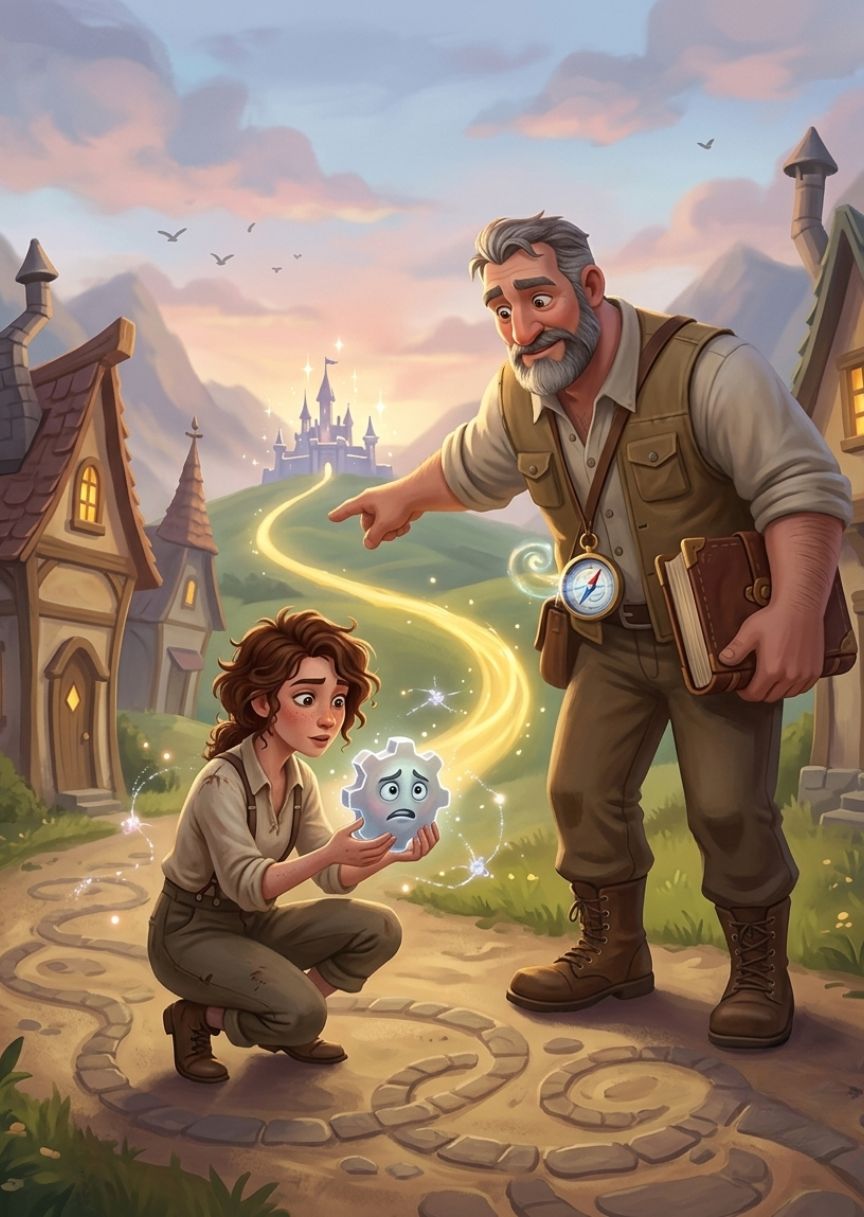
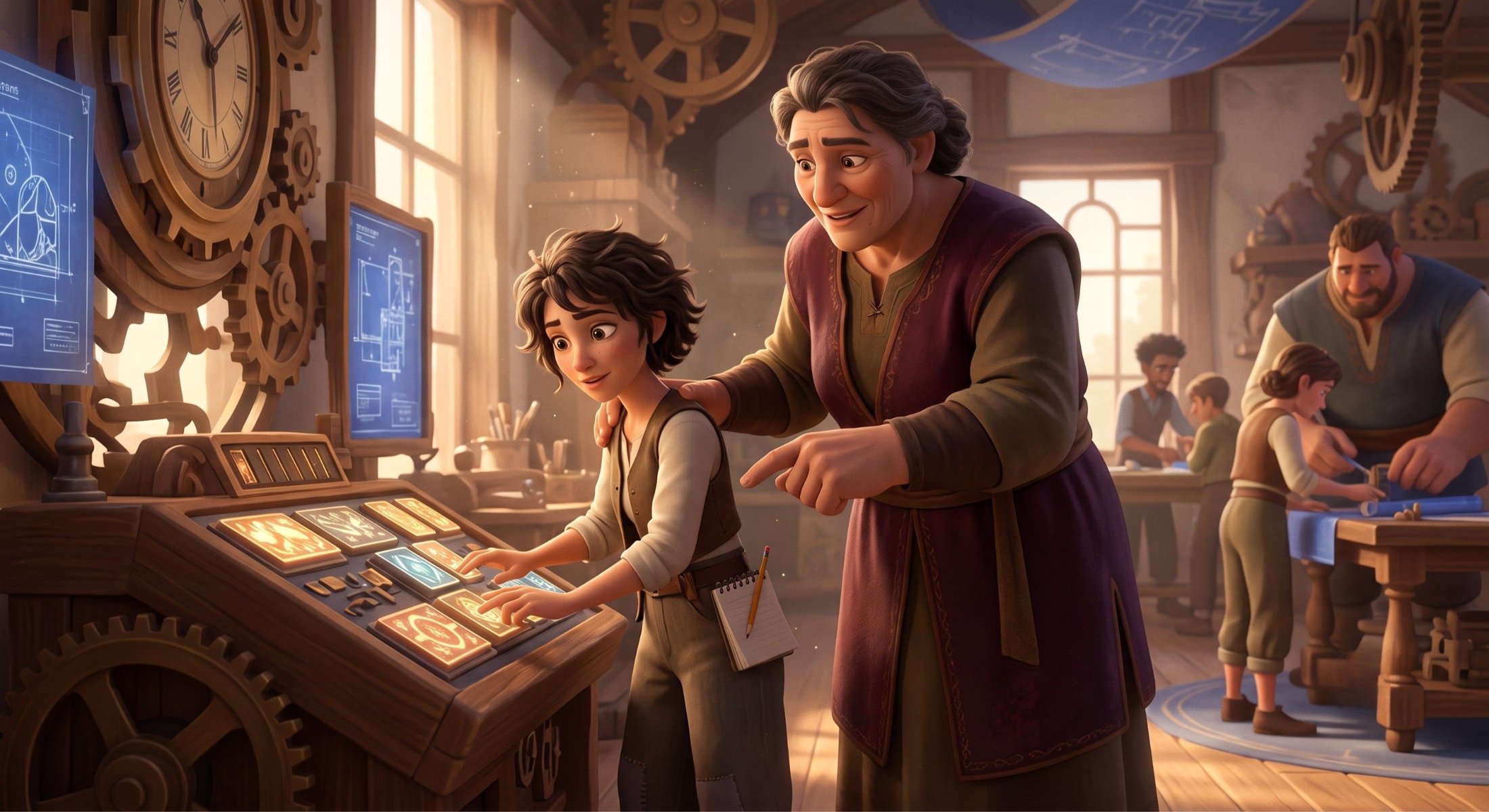
You know the feeling: you've had the insight, named the pattern, maybe even cried about it in therapy. And then Monday rolls around and you're back in the exact same reaction, the exact same voice in your head, the exact same defensive move.
Insight doesn't rewire identity. But making something does.
When you paint, write, move, sculpt, or even doodle—when you sit down and your hands actually do something—you step out of the autopilot that runs most of your day. Not through understanding. Through direct experience. That's the gap between knowing you're stuck and actually being different.
The Observer Lives in the Doing, Not the Thinking
Your brain automates everything it can: your posture, your tone, the voice that says you're not enough. This efficiency is survival. But it's also where identity inertia lives—the pattern runs, you react, and before you're aware of it, you're back in the loop.
Creative work interrupts that loop at a level thinking alone can't reach.
When you're fully absorbed in making something, you're not performing your usual identity. You're stepping outside it. Your attention narrows to the texture of the paint, the weight of the pencil, the rhythm of your breath. You're not thinking about your patterns. You're in a completely different operating system.
This is the observer position in real time—the exact move that The Moment You Name the Pattern, You've Already Won teaches you to practice in stillness. But creative flow gives your nervous system proof that the move is real. You don't just understand it. You experience what it feels like to be outside the autopilot for an hour.
Why Sensory Awareness Breaks What Willpower Can't
Creative expression works through your senses, not your narrative. When you're painting, you're not thinking about color in the abstract—you're perceiving the difference between ultramarine and cerulean, noticing how the brush changes the stroke, feeling the resistance of the canvas. When you're writing, your fingers are moving faster than your critical voice can catch you. When you're moving, you're tracking weight and breath, not reciting affirmations.
This sensory specificity matters because it bypasses the voice that tells you who you are and what you can't do. It places you in direct contact with creation, which exists outside that voice's jurisdiction. What your nervous system knows that a bot can't learn is that embodied experience doesn't argue with you. It just rewires you.
Your nervous system registers the difference between thinking about change and experiencing something genuinely new. One is meditation on the problem. The other is proof that a different mode exists.
The Framework Meets the Maker
In Awareness, the second journey in the 12 Journeys framework, you learn to occupy your own internal space without trying to change it. You practice noticing what runs in the background—the voice, the pattern, the habit—and stepping back from it rather than being hijacked by it.
Creative work teaches you the same skill, but from the outside in. You don't sit still and notice. You do something. You occupy the maker's space instead of the identity's space, and your nervous system has to follow. That shift is the rewiring.
Consistency matters the same way it does in the framework. How Slack Breaks the Scarcity Cycle teaches that your nervous system learns through repetition, not intensity—small, regular practice over time. Creative work follows the same pattern. One painting session doesn't rewire your identity. But ten minutes of actual making, week after week, does. Each time you sit down to create, you're weakening the old neural pathway and building a new one. Each time, you're choosing the observer position again.
What This Actually Looks Like
It doesn't require talent, a clean studio, or hours of uninterrupted time. It means:
Showing up to the act itself. Ten minutes of actual moving, marking, or shaping beats an hour of planning. Your nervous system learns through the doing, not the preparing.
Letting the process be messy. The perfectionist voice—the one that says it has to be good—is part of the identity you're stepping outside. Permission to be clumsy is permission to practice being different.
Returning to it, small and consistent. One session becomes two becomes a pattern. Your brain begins to recognize creative flow as a place you actually go, not a rare event or something other people do.
Noticing what shifts. You'll find yourself less reactive after you create. More present. That's not coincidence—that's your nervous system registering a new possibility and starting to prefer it. Noticing that shift teaches your brain it's worth repeating.
The Bridge Back to Your Identity
Creative expression doesn't replace the framework. It accelerates it. You still need awareness—the practice of noticing what runs in the background. You still need structure and guided, consistent work. But when you add the sensory interruption of creative flow, you give your nervous system proof that a different mode is available.
That proof is what makes identity change stick. You've not just understood intellectually that you can step outside a pattern. You've felt what it's like to operate from a completely different place for an hour. Your body knows now. Your nervous system has registered it.
That's when the old pattern starts to lose its grip.
Key Takeaways
- Creative making—not consumption—pulls you out of autopilot into the observer position, the same cognitive move that interrupts identity inertia.
- Sensory awareness (texture, color, movement, breath) bypasses the narrative voice that runs your patterns and places you in direct contact with something new.
- Consistent creative practice, however small, weakens old neural pathways and builds new ones through the same mechanism the 12 Journeys framework uses.
- The shift you feel after making something—more present, less reactive—is your nervous system registering that stepping outside your default self is a repeatable skill.
- Creative flow works best as part of a framework, not instead of one—paired with the structure of guided, consistent practice.
Start Here
Ready to practice the observer position in your own way? Join the Tribe free and meet Rimi, your AI guide. Your first journey is free—no credit card required—and you'll get daily check-ins to help you see the patterns that are actually shifting.
👉 Start your first journey free