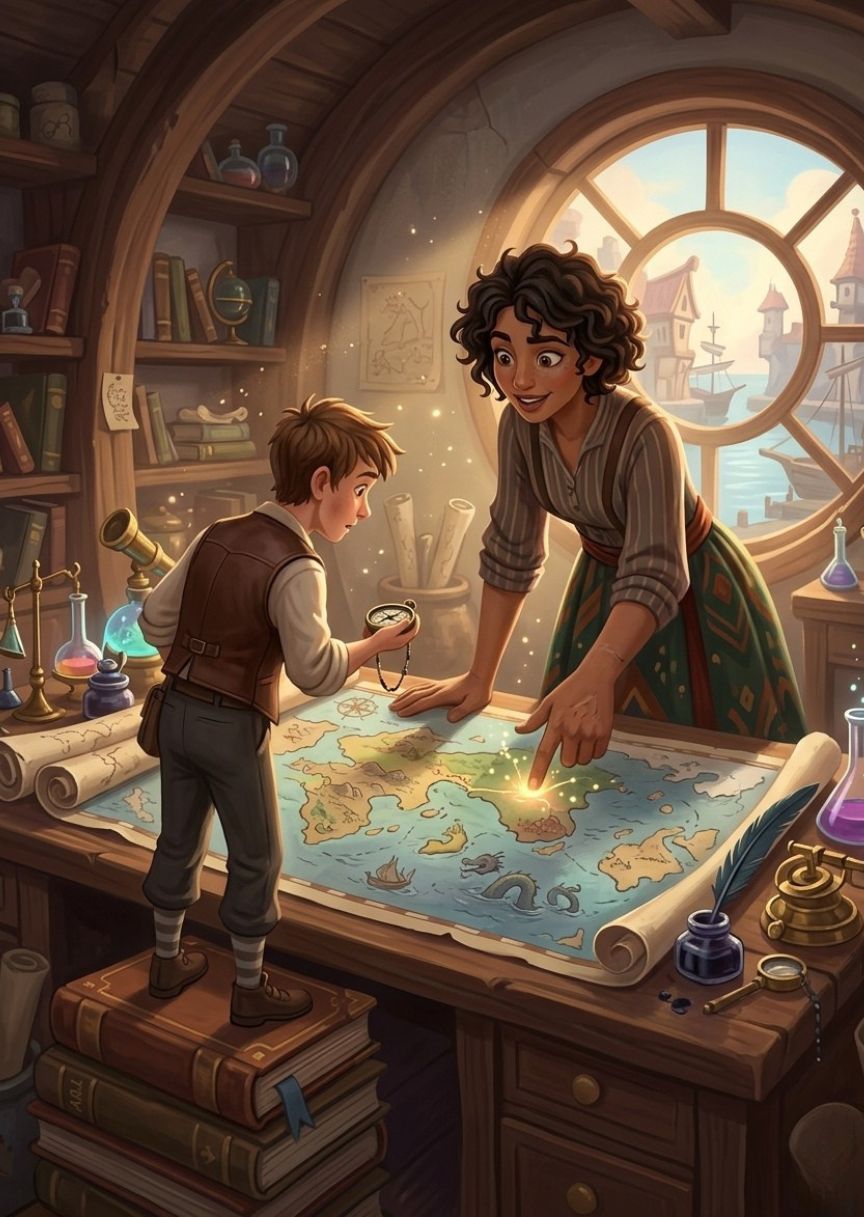
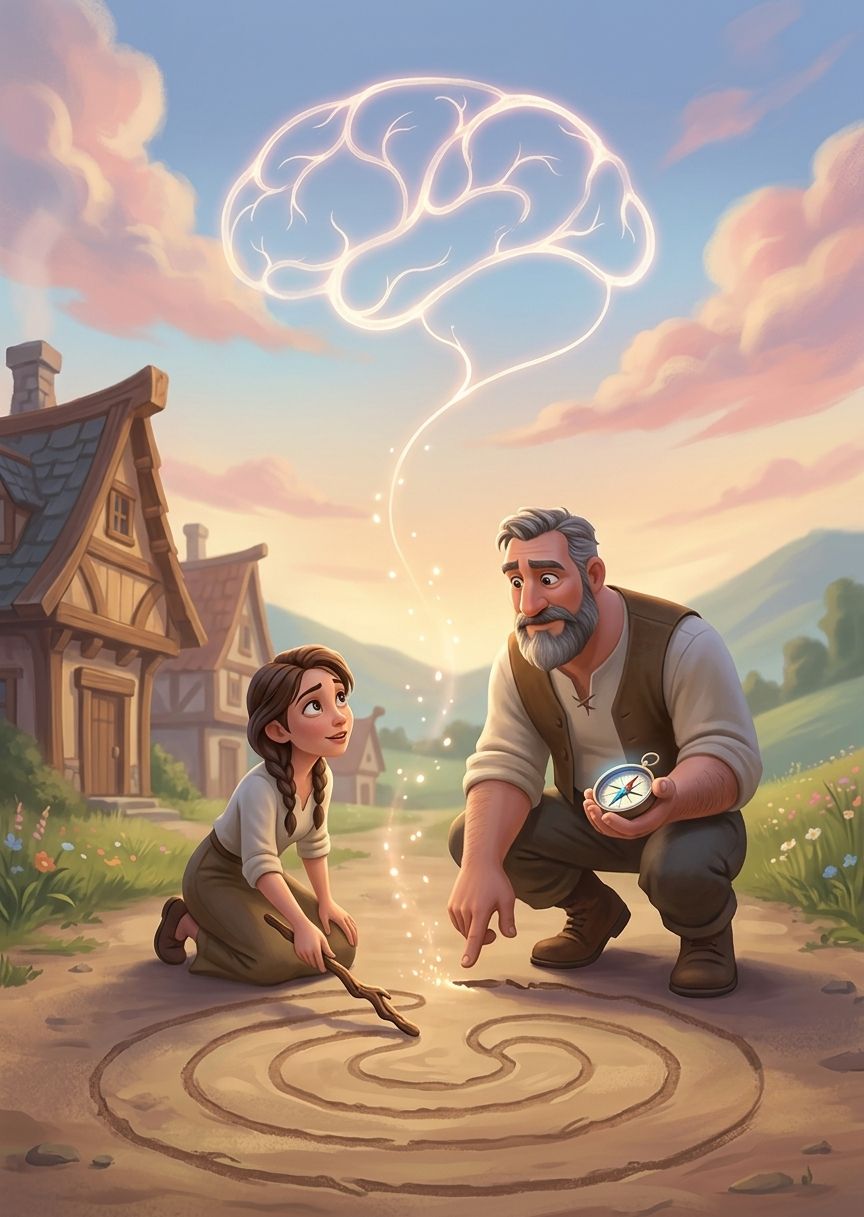
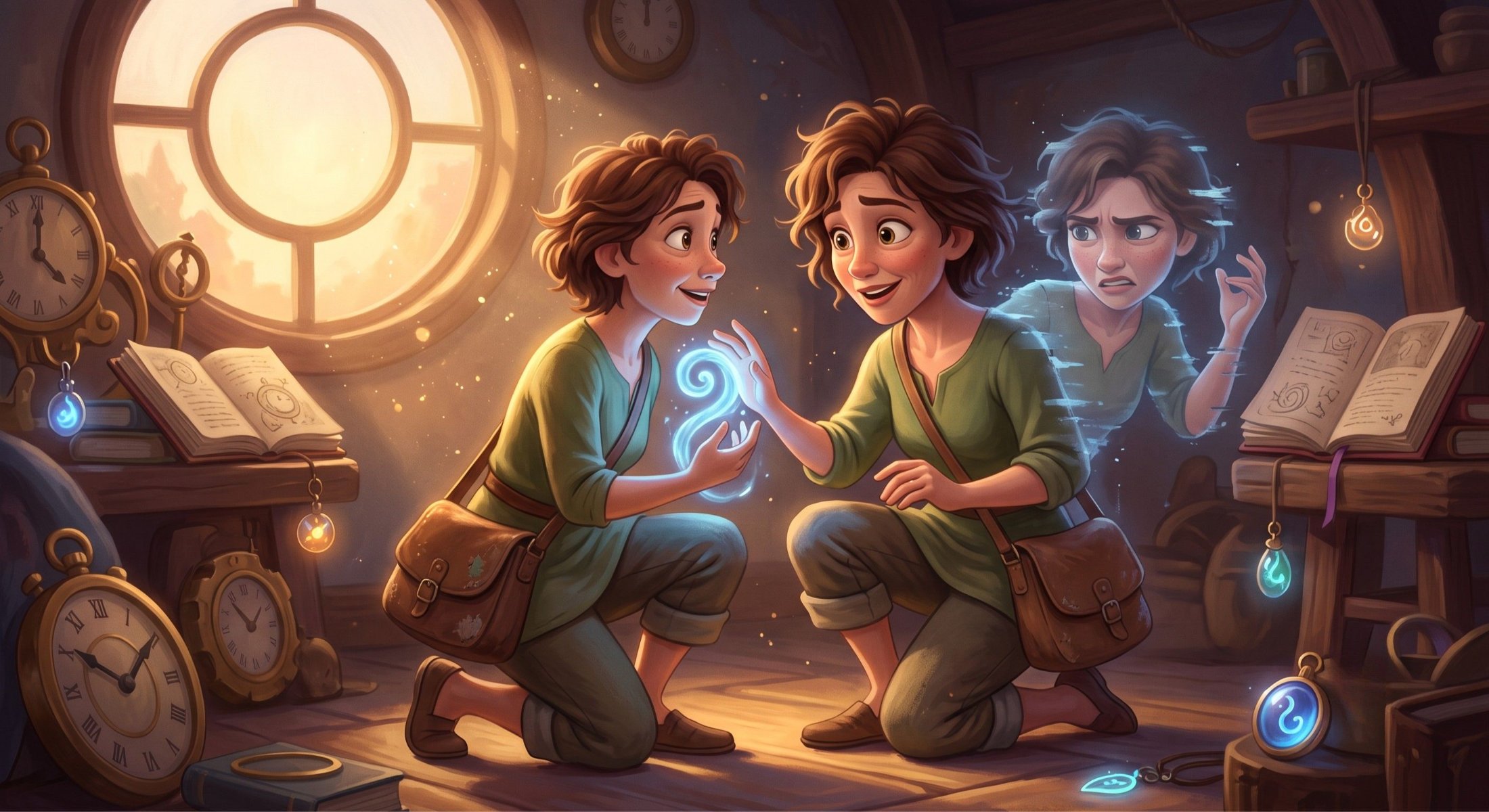
TL;DR: Creative expression—whether through movement, sound, color, or craft—interrupts the default mode network's autopilot by anchoring awareness in immediate sensory experience. When the body enters flow, the old identity pattern loses its grip. This is how the 12 Journeys framework moves you from knowing better to being different.
You already know the problem. You've felt it in your jaw, your shoulders, the familiar tightness that arrives before you even decide to react. Your body moves into the same defensive posture. Your mind reaches for the same narrative. And no amount of insight—no therapy session, no journaling, no rational understanding—seems to dislodge it.
This is identity inertia. And it lives in the nervous system, not in the thinking mind.
When you try to rewire yourself through willpower or awareness alone, you're working at the wrong level. The old pattern isn't a belief you can argue with. It's a somatic pathway, a well-worn groove your body knows how to run. Breaking it requires something the analytical mind cannot do: you have to feel your way into a different state.
Creative expression—real creative expression, not performance or self-improvement theater—does this. It interrupts the loop not by thinking your way out, but by anchoring your nervous system in the present moment through sensation.
Why Drawing, Making, and Movement Beat Affirmations
When you sit with a thought—even a thought you consciously reject—your nervous system stays tethered to the old narrative. You're still in the pattern, observing it from inside. But when you move your hands, pick up a brush, or let your body follow a rhythm, something shifts. The default mode network—the brain's autopilot, the place where identity loops run—becomes less active. Your attention moves from the story to the sensation.
You're no longer the character in the narrative. You're the one making something new.
This is why creative flow states interrupt identity inertia where self-talk fails. When you're in flow—absorbed in the texture of clay, the weight of color on canvas, the coordination of your body moving through space—you're not thinking about who you are. You're experiencing it. And experience creates shifts that thinking alone cannot.
The Somatic Path: How Your Body Knows What Your Mind Can't Yet Say
The 12 Journeys framework teaches that identity is not a thought. It's embodied. It lives in your posture, your breath, the reflexive tension patterns you've carried since childhood. Which means identity shifts don't happen through belief work alone. They happen when the nervous system learns a new baseline.
Creative expression is one of the clearest somatic pathways into that learning.
When you engage in sensory-rich creative work, you're doing three things at once:
You're activating present-moment awareness. The moment your hands touch something—clay, paint, an instrument, the ground—your attention has to be there. Not in the story you've told yourself. Not in the pattern you're trying to escape. Here. Now. This texture. This color. This breath.
You're building tolerance for not-knowing. In creative flow, you don't have a predetermined outcome. You follow what emerges. This is radically different from the default-mode loop, which runs on scripts—familiar, predictable, safe. Learning to trust what wants to happen rather than controlling what should happen begins to loosen identity inertia's grip.
You're practicing cognitive control without effort. When you're making something, and a critical voice pipes up—This is bad, you're not creative, why are you doing this—you have a choice. You can listen to the voice, or you can listen to the work. Each time you choose the work, you're weakening the old neural pathway and building a new one. But it doesn't feel like effort. It feels like play.
Why Movement and Expression Matter More Than Information
You've probably consumed plenty of information about change. You know what to do. The gap isn't knowledge—it's embodied practice.
Here's the shift: you're not trying to think your way into a new identity. You're practicing being that identity through the specific sensory experience of creating.
This matters because the nervous system doesn't learn from ideas. It learns from experience. Repetition. The felt sense of moving, making, expressing from a state that's not defended, not small, not running an old program.
When you draw, you're not drawing yourself into greatness through the art itself. You're drawing yourself into a nervous state where the old identity loop can't run. That state—relaxed, focused, creative, present—is incompatible with the tension of the Small Self.
Sustain that state consistently, and your baseline shifts.
The 12 Journeys Connection: Sensory Practice as Framework
The framework teaches that identity rewiring happens through consistent, guided practice with checkpoints that help you see the patterns you're actually shifting. This is where creative expression lives within the 12 Journeys structure.
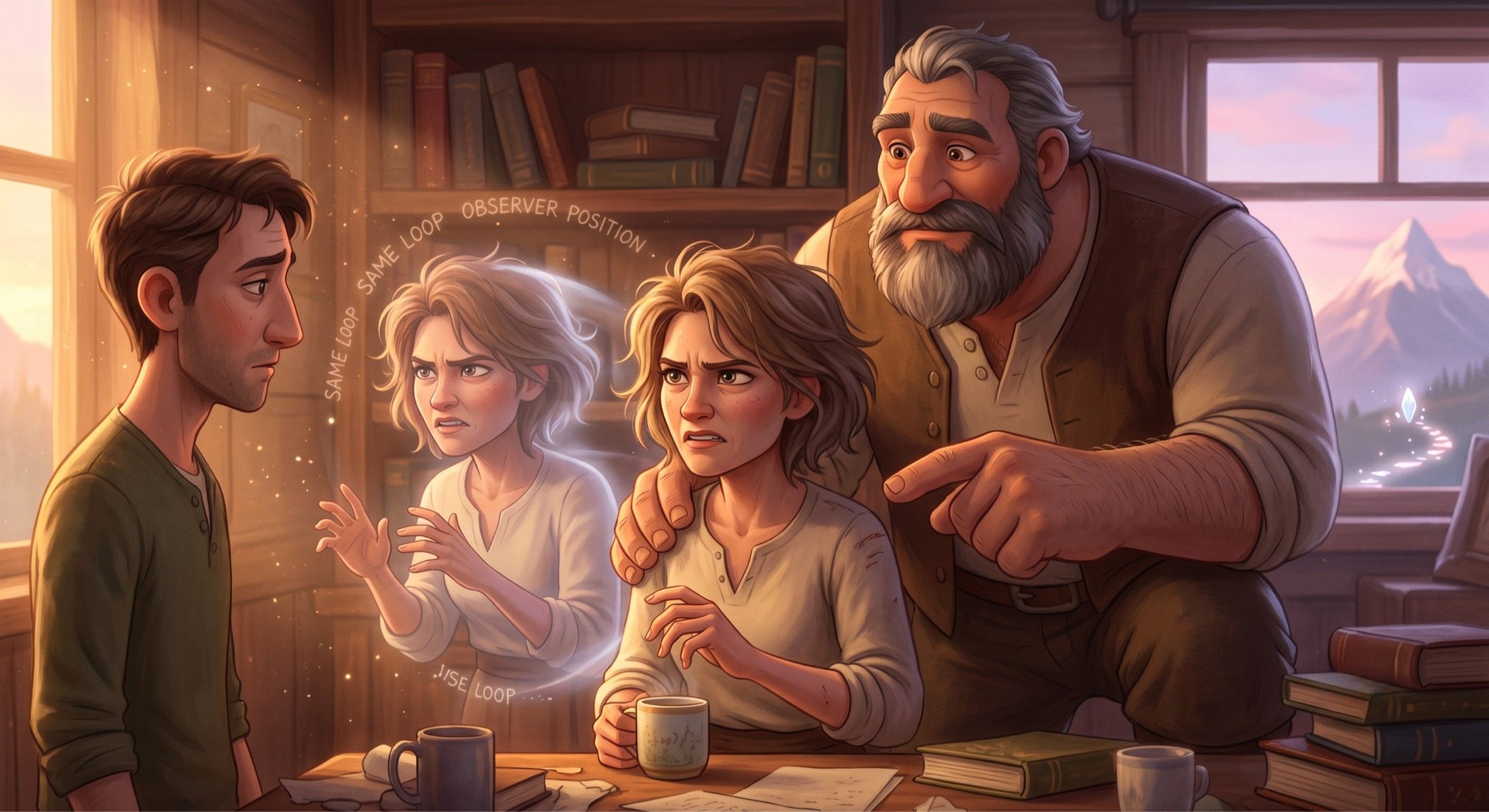
You don't start by trying to become someone different. You start by observing what runs in the background—the Non-Consciousness journey, learning to notice the patterns without judgment. But noticing is only the first step. The real shift comes when you practice being the observer, not the thought. And sensory, creative practice is one of the clearest ways to occupy that observer position.
When you're making something, you're practicing presence. When you're expressing something that doesn't have words yet, you're practicing the skill of knowing without analyzing. When you move your body in ways that feel true rather than defensive, you're anchoring a new nervous state.
Repeated consistently, this is how the Small Self softens and the Giant Self becomes embodied—not as a concept, but as a felt way of being.
Where to Start
You don't need to be "creative" to use creative expression as a rewiring tool. This isn't about making art. It's about using sensation and movement to interrupt the autopilot.
Start with something that pulls your attention fully into your hands, your body, your senses. Pottery. Drawing. Dance. Cooking. Building. Writing. The medium doesn't matter. What matters is that it requires you to be present, that it doesn't have a "right answer," and that it feels slightly alive—not like another task on a list.
Then notice what happens when the critical voice shows up. You have a choice: you can listen to the voice, or you can listen to the work. Each time you choose the work, you're choosing a different nervous state. And that choice, repeated, rewires the system.
This is the work. Not thinking your way different. Practicing your way different through the body.
Ready to explore this deeper? Join the Tribe of Giants free and start your first journey at no cost—no credit card required. Connect with our community and begin the Non-Consciousness journey to observe the patterns running in the background. For access to Rimi's guidance through the specific sensory checkpoints of all 12 Journeys, explore our All-Access membership.
👉 Start your first journey free